Short preface
Hello reader,
I've tried my best to fill the gaps in the Society's history, and to give a complete overview from its founding in 1970, to the Present Day. Unfortunately, some things have been lost or
forgotten, so there may be some gaps here and there - particularly in the region from 1980-2010. I want to give a particular thank you to Dr Allan Chapman, for his assistance and insight on the Society's
early history, including its initial founding by him in 1969. Without him not only would I not have much to work on, but there wouldn't be an early history to begin with!
John Ray -25/26 President
The Founding Years
(1970 - 1975)
Since he first saw the Moon through a 'coin in the slot' telescope on Torquay Harbour around the age of 9, Dr Allan Chapman grew fascinated with Astronomy. He made his first simple telescope from an old pair of spectacles and a Watchmaker's eyeglass, aged about 11 or 12, while still at Secondary Modern school, and went on to be an early member of his local Salford Astronomical Society around the age of 19, during its founding in 1965 (today having the title of being the Society's Honourary President). When he came to Lancaster as a mature student in 1969, he set about creating a Society of his own - Lancaster University's own Astronomical Society. On founding the Society, he was told that the University Offices already had a telescope, specifically a Japanese-made 3-inch Equatorial Refractor with a tripod, and that he could have it. From this came an idea - to create an Astronomy Dome to house it; enabling its use by fellow students and staff members.
Chapman's Observatory
(1970 - 1972)
The Observatory rapidly took shape in my mind, and from the six College Student Unions then in the University, I raised about £100 to fund it. Permission was granted for a small observatory on the University Field Station off the lane leading down to Galgate, and I prepared a set of drawings (I was always a good draughtsman) for submission to the University Architect. The plans were accepted, and I began work on the Observatory in early July 1970. I was allowed to retain my room in Fylde College during construction, and returned to my native Swinton & Pendlebury on my small motorcycle every few days.
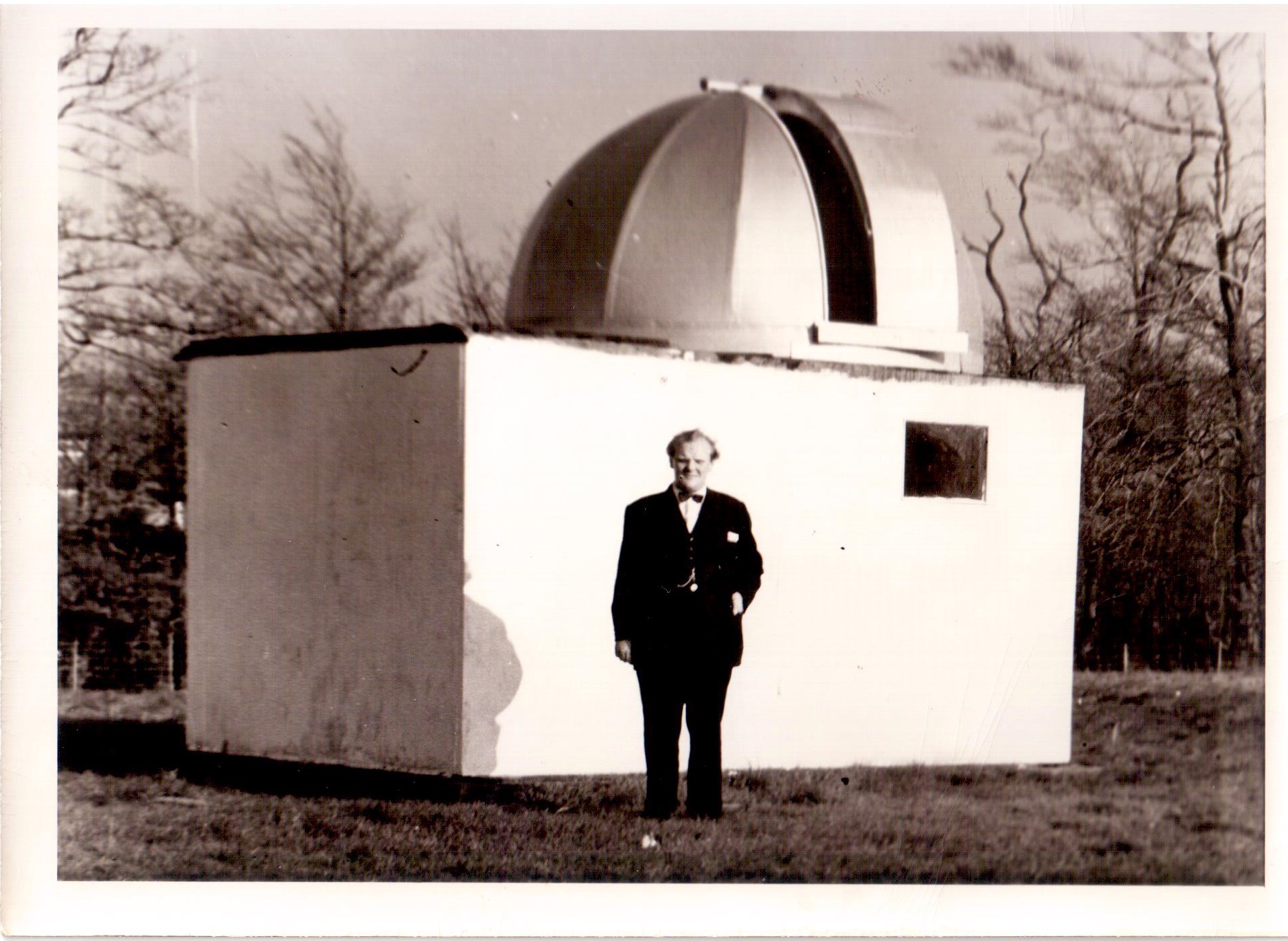
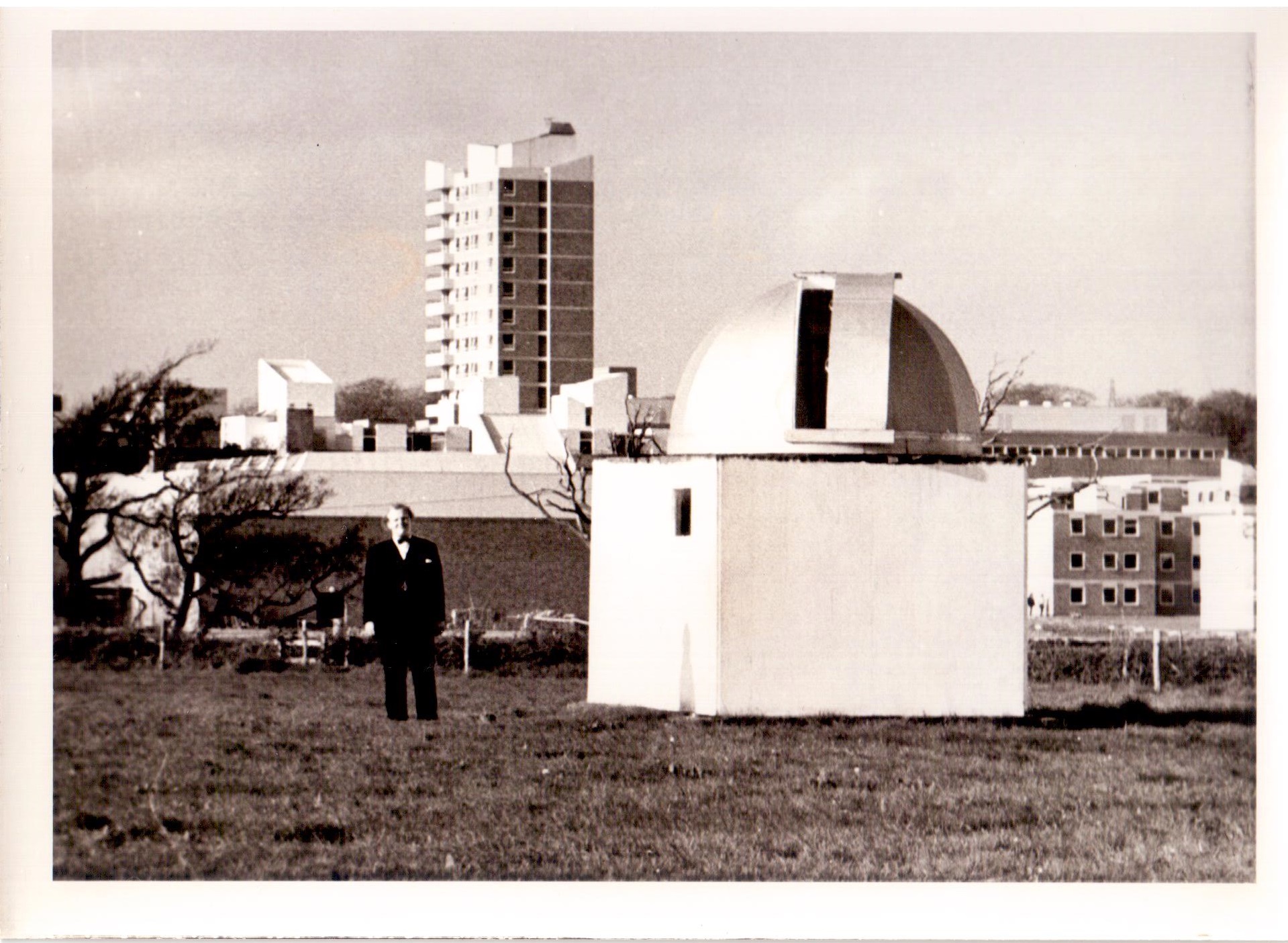
He submitted plans to the University Architect for a 6-by-10-foot wooden timber building to mount a 6-foot Astronomy dome, with a movable slit that could rotate on grooved wheels. This plan was approved. Mr Bert Tyson, then in charge of the University Maintenance Dept.,
down near St Leonards' Gate in the City, gave him floor space, and assisted him in the workshop (alongside occasional help from his Father and Grandfather). They used a large bandsaw to cut wooden arches, onto which 6mm-thick 'marine' plywood was nailed, for use in the roof segments which supported the dome.
A 6-by-12 foot rectangular building, made of the same strong 'marine' plywood, was also constructed to support the finished dome and rotary trackway.
Ultimately, the entire Observatory was designed and constructed by him in less than one month - an accomplishment made even more impressive by the fact that he studied neither Physics nor Engineering, but was a reader in History. As it was a summer vacation when it was being constructed,
no students were around to witness the construction. Once they returned the term later, however, the Observatory attracted hosts of students, who mostly wanted to view the lunar craters through the 3-inch refractor and to see the dome rotate.
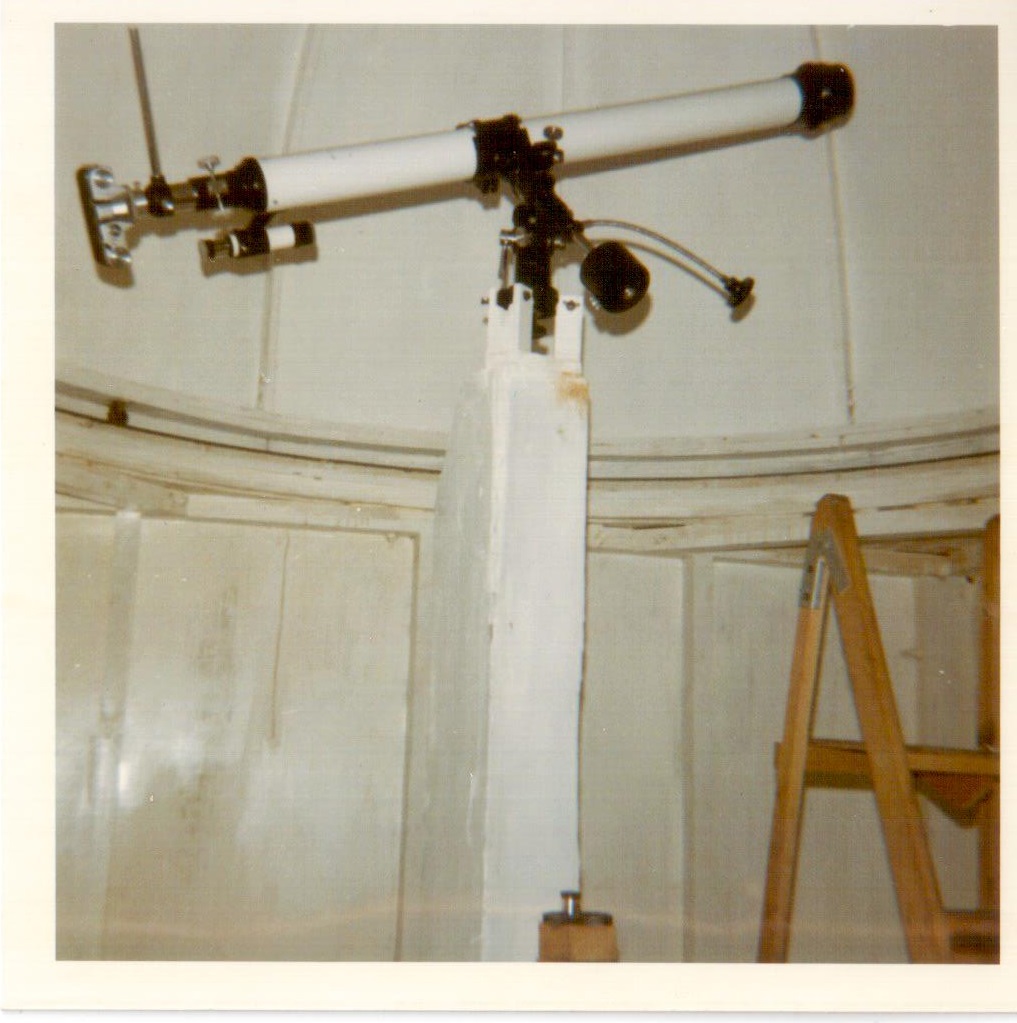
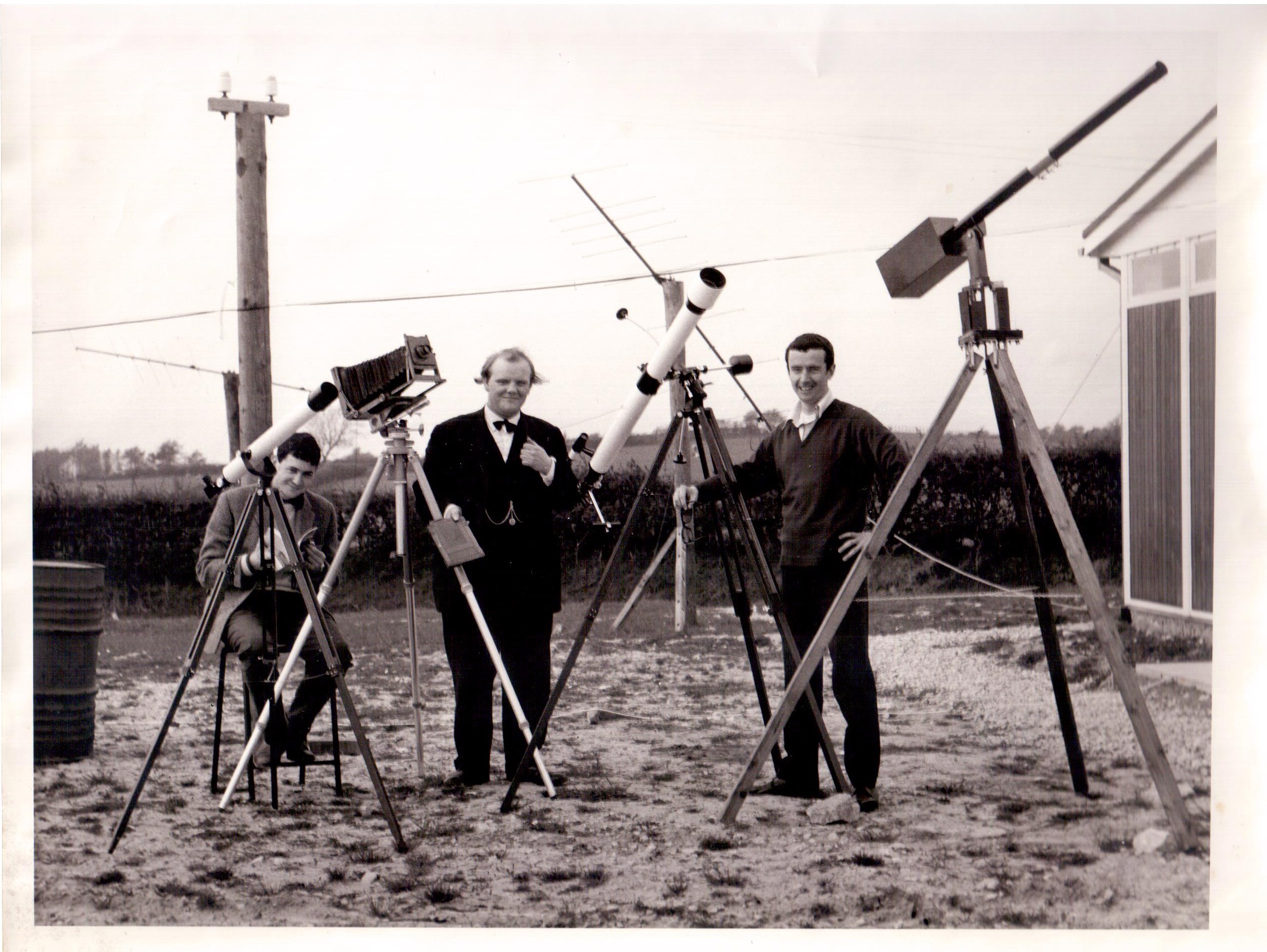
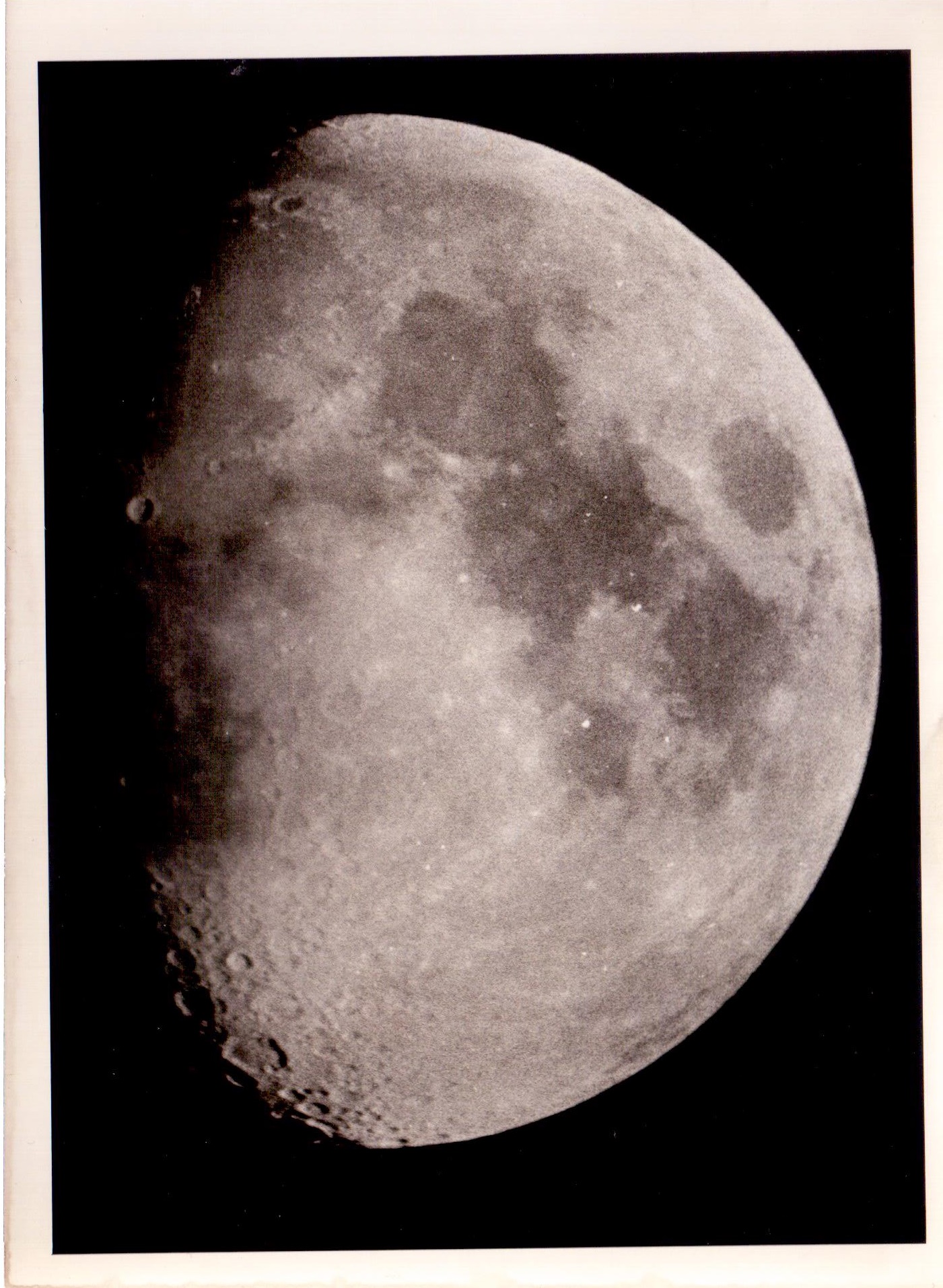
The Bailrigg Observatory was an excellent success for the Society, and marked some of the first practical Astronomy done by students at the University (predating both the University's first focus on Astrophysics and Cosmology in the early 1980s and the formation of the University's Observational Astrophysics Group which was set up in 2015). In fact the Physics Department itself was only officially set up a year before, in 1969, and the main Physics Building only constructed a couple of years prior too. A notable event for the Society before the observatory's construction was during The Mercury Transit of 9th May 1970. This was a key galvanising force in stimulating astronomy across the student and academic bodies at the time and showed the potential of the Society's original 3-inch refractor; encouraging funding for an observatory to house it.
Dr Chapman received the Queen's Award in 1970 for the highest first-year exam marks in his degree, and went on graduate with a high 'First' Grade two years later; going on to receive a doctorate in the History of Astronomy at Oxford. After he left, the observatory field was taken for the further development of the University, the wooden observatory building demolished, and the six-foot dome acquired by Mr Denis Buczynski, a serious Lancaster Amateur Astronomer, who took it for his new home and Observatory in Scotland. Unfortunately, the 3-inch refractor was, at some point, stolen by thieves - all that remains today are the photos, the memories, and the legacy.
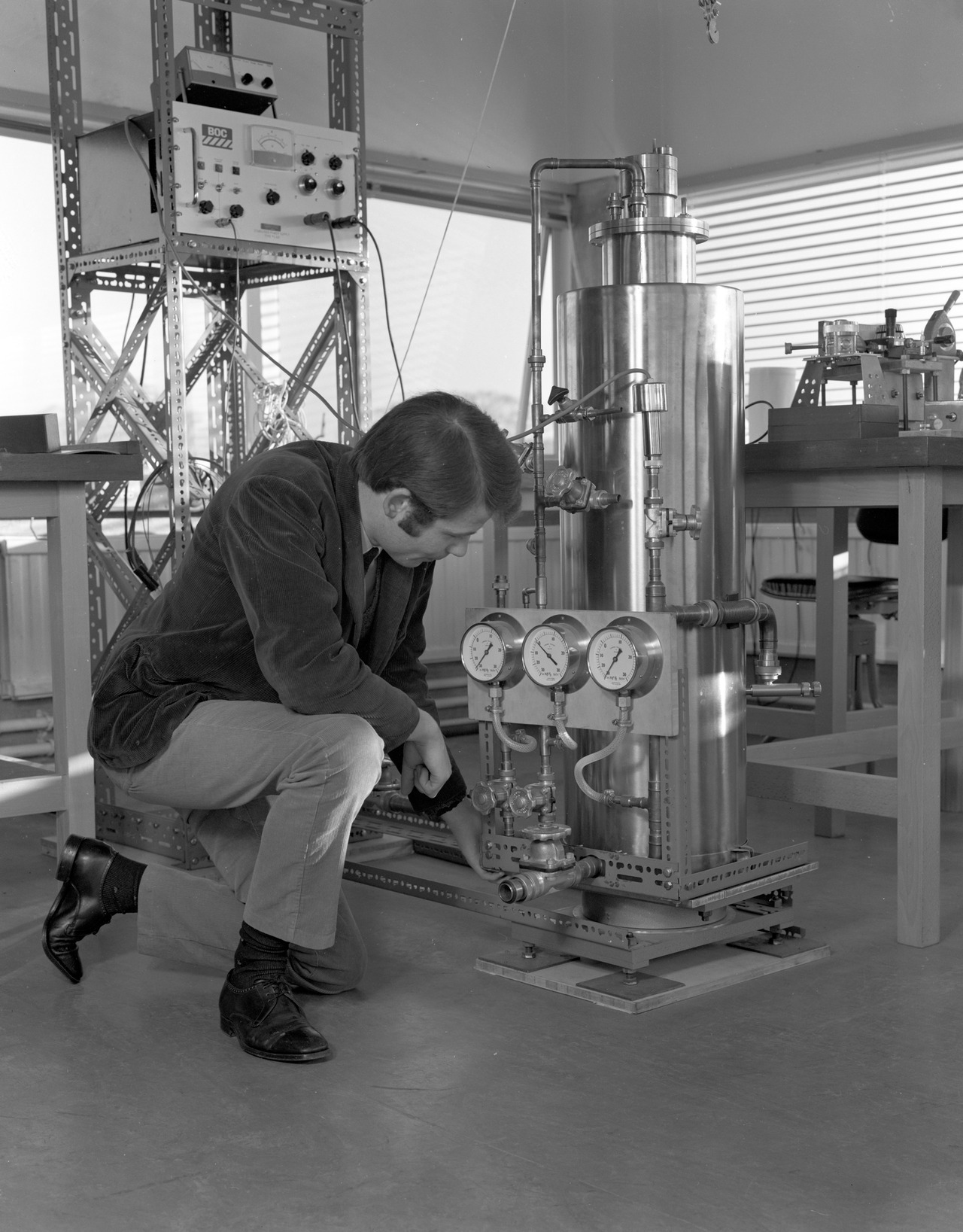
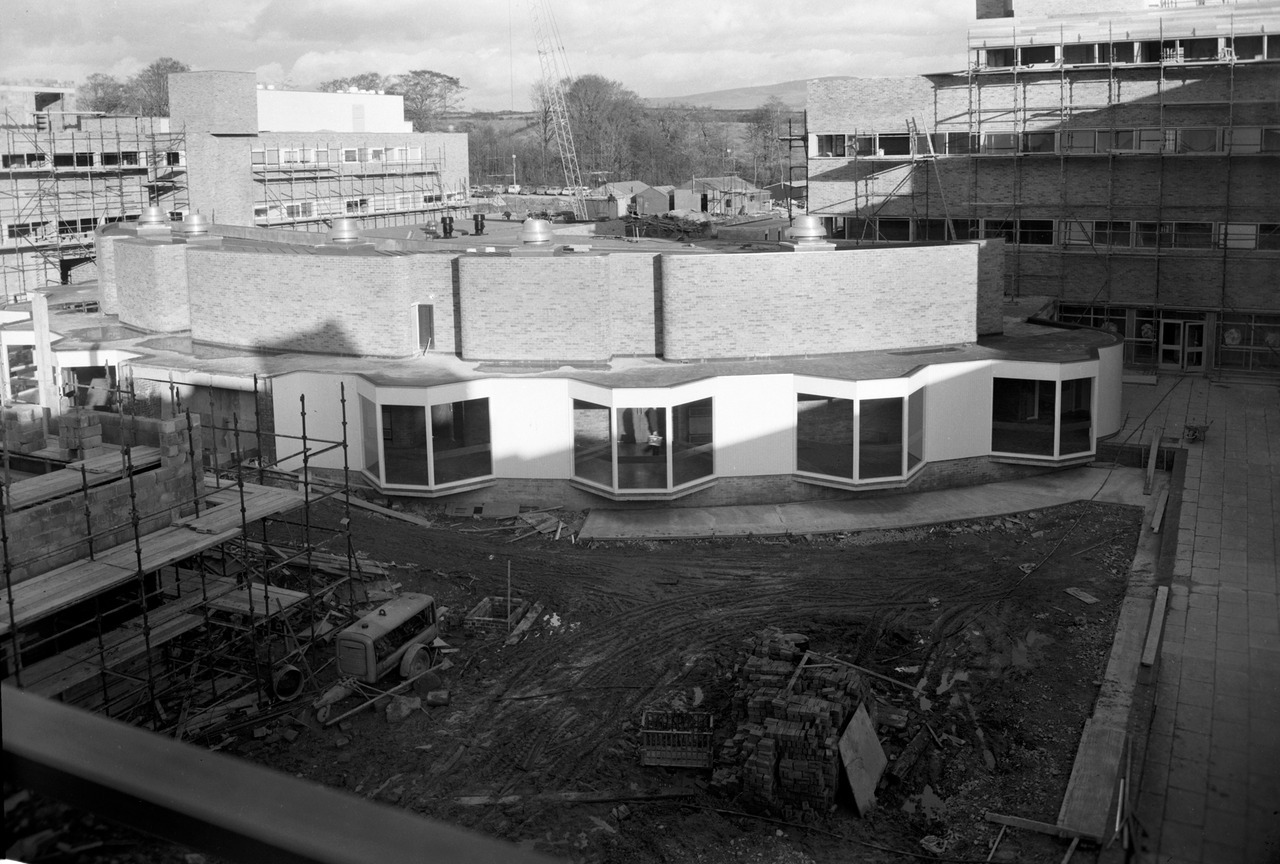
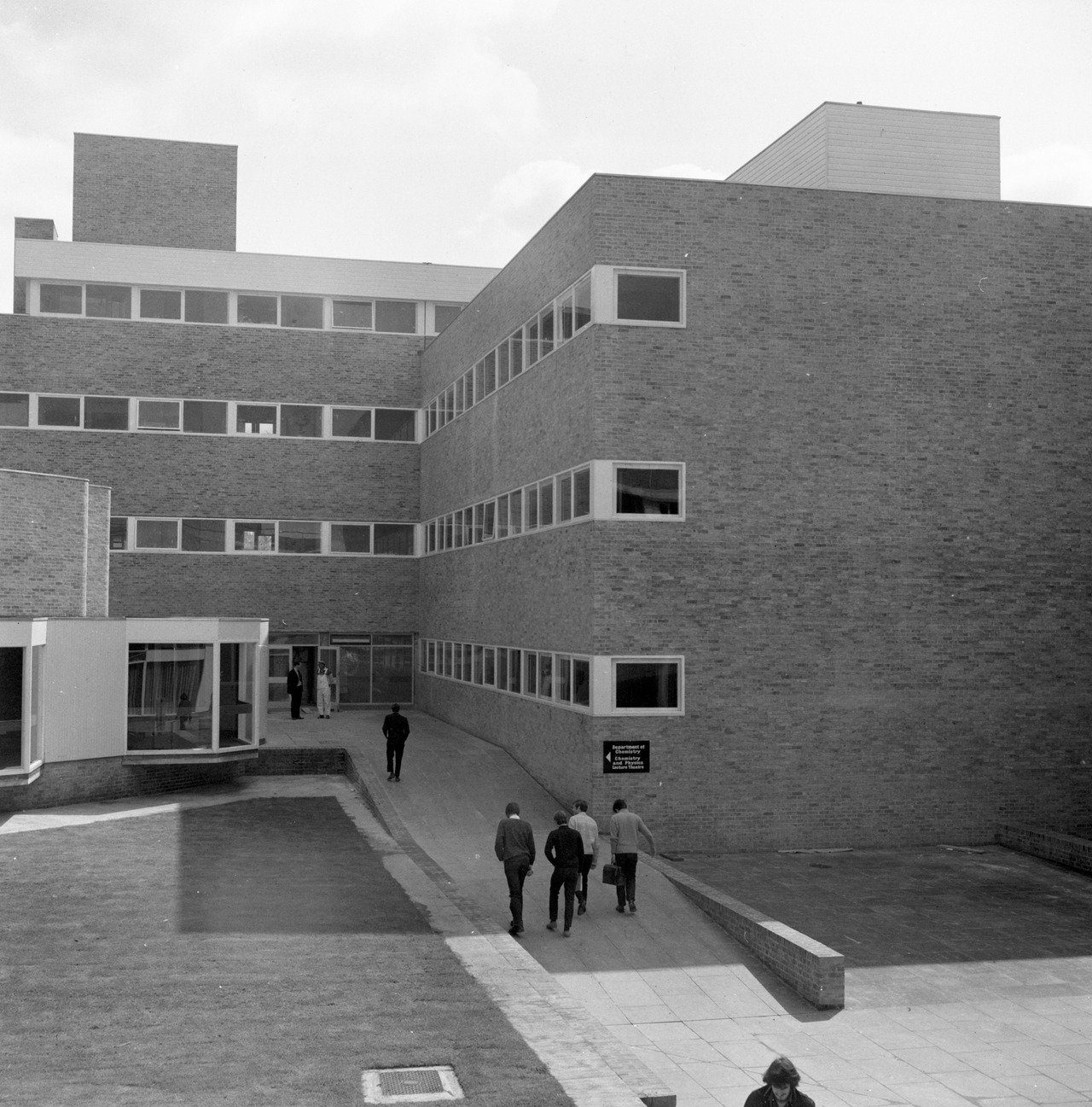
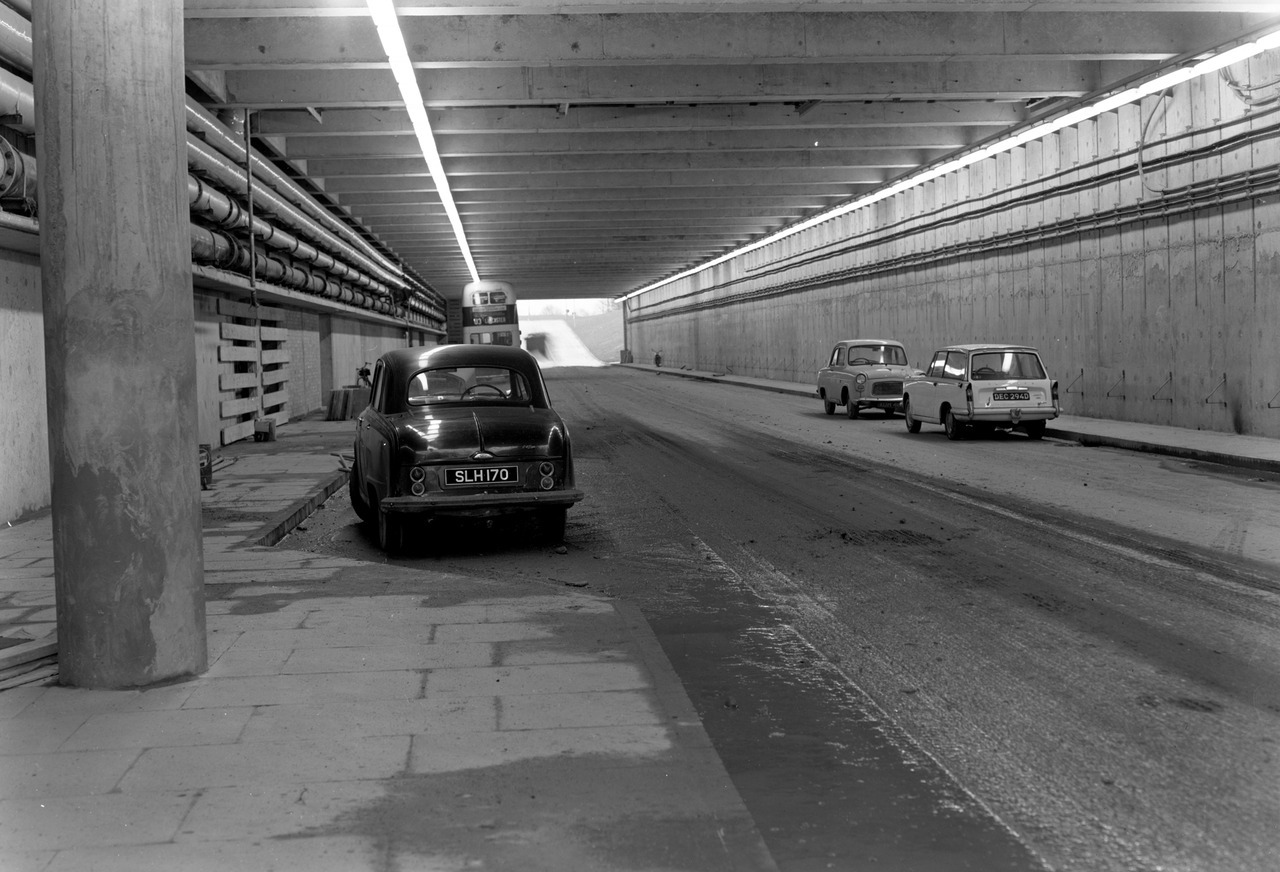
Dr Russell Harvey, the Teaching Laboratory Manager within the Physics Department of the university, helpfully compiled an archive to show scans of old Physics Department negatives, dating from the mid 1960s to the late 1980s - all of which can be viewed by visiting www.lancasterphysicsscans.tumblr.com. Although much of these images are unrelated to LUAstro, they provide a wonderful glimpse into what the Physics Department, and Lancaster University itself, was like at this time.
The Early Society
(1975 - 1990)
Records of the Society from this time are particularly difficult to find. It is known that one of the co-founders of the Lancaster and Morecambe District Astronomical Society (LAMAS) had close ties with the University society, from personal correspondence. The only confirmed record involving the University society I can find is that of a LAMAS-LUAstro joint event in August 1978, whereupon Lancaster University's Great Hall hosted a 1.5hr-long talk by Sir Patrick Moore on the subject of Mars.
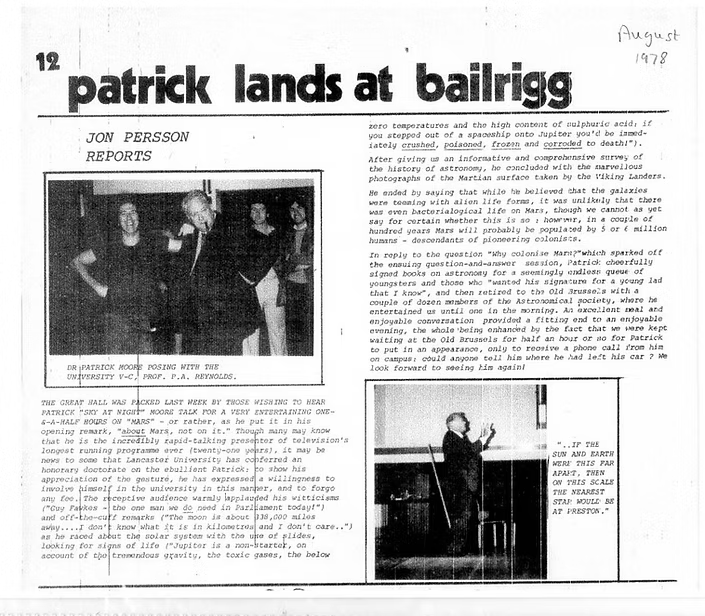
The Moon is about 238,000 miles away ... I don't know what that is in kilometres, and I don't care...
Fylde Observatory
(1978 - 1986)
Outside of the Society however, there was still Astronomy being done at the University. After Dr Allan Chapman left Lancaster in 1972, his observatory was dismantled - but with that, was left a vacuum. At some point in the following six years, a new observatory was built to fill this - Fylde Observatory. It was situated beside the accommodation of Fylde College on the University Campus, from which it got its name, with access via a bridge walkway into an adjacent room.
Fylde Observatory was a joint project between Physics and the Environmental Sciences Department (led by Professor Lionel Wilson, with then-Post-Doctorate student Geraint Day, of the Lunar and Planetary Unit, among others). This setup of the Observatory as an inter-departmental project led to a variety of complications. Access was seemingly controlled through Environmental Sciences, but, as a joint Physics-EnvSci project, the actual responsibility of the observatory was shared between the departments. The bureacracy of this greatly restricted its use by students, and it was mainly used by staff of each department as a result.
Fylde Observatory had a 11" Newtonian telescope on an equatorial mount. According to Dr Ian Bradley, who used the observatory, the dome was not motorised, but due to lack of recordings at the time this is uncertain. The shutter of the observatory was a sliding piece of hardwood which, due to Lancaster's infamous weather, frequently blew off onto the South Spine of campus in strong winds. The telescope was mainly used to target Planetary or Lunar objects as its position at the centre of campus along the South Spine caused light and heat pollution to restrain the observation of any deep-sky objects using the setup.
As should be clear by now, the observatory needed constant management and upkeep. This, when paired with its setup as an inter-departmental project, led to it falling into disrepair sometime in the 1980s. Reportedly, it had been used as part of an EnvSci project, and left in a particularly sorry state...
I returned as a new-blood lecturer in 1986... and needless to say, I enquired about the Fylde Observatory of Keith Wigmore... I was devastated when I went in there. The dome slit was only partially closed with the sliding hardboard partially up leaving a gap of around half a meter or so! The mount was a rusting wreck and didn't look salvageable. The telescope was not mounted on the mount but the tube was just stood upright. The mirror was lying uncovered on a bench, silvered side up, and covered in leaves... The Newtonian secondary and eyepieces had all gone... I removed the mirror in an attempt to keep it safe hoping at some point we could resurrect the instrument. Health and Safety stopped access to the dome given the dodgy nature, of that, and eventually the observatory was removed and the roof sealed.
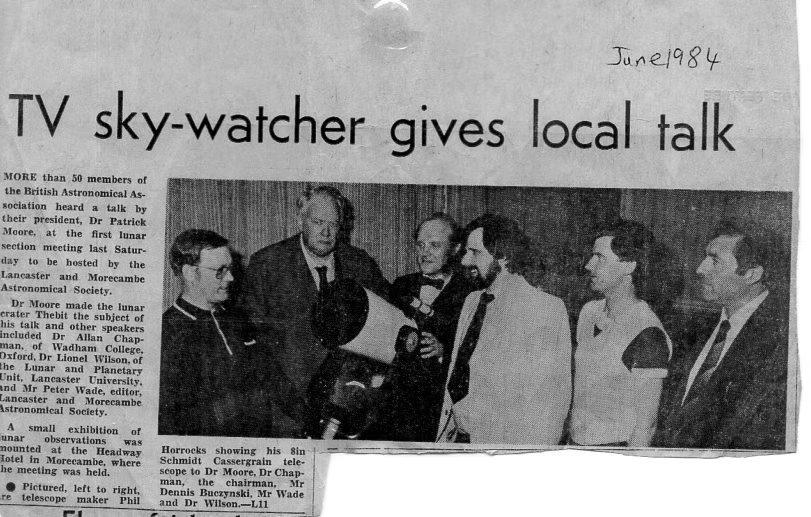
A less depressing event around this time was a meeting by members of the British Astronomical Association (BAA), hosted by LAMAS in June 1984. The event involved a small exhibition of lunar observations at the Headway Hotel in Morecambe, alongside a talk by then BAA President, Sir Patrick Moore, regarding the lunar crater, Thebit.
The Inbetween Years
(1990 - 2017)
Records of the Society during the 1990s are, as far as I can determine, virtually nonexistent. There is a very clear reason for this, however. From the 1990s to the year 2000, there was no permanent observatory at the University, or any departmentally-owned telescopes, or even any Astronomers in the Physics Department! For a considerable while there wasn't even an Astronomy or Astrophysics-based module available. This started to change when a non-Physics degree scheme called "Universe as an Art" (teaching the history and science of Astronomy from an artistic perspective) began to grow particularly successful, eventually growing into a 3rd Part I stream for Physics students, and then into a fully-established Physics Module. Yet, at this point, the Physics Department still had no telescopes with which students could use. In the early 2000s, this finally began to change...
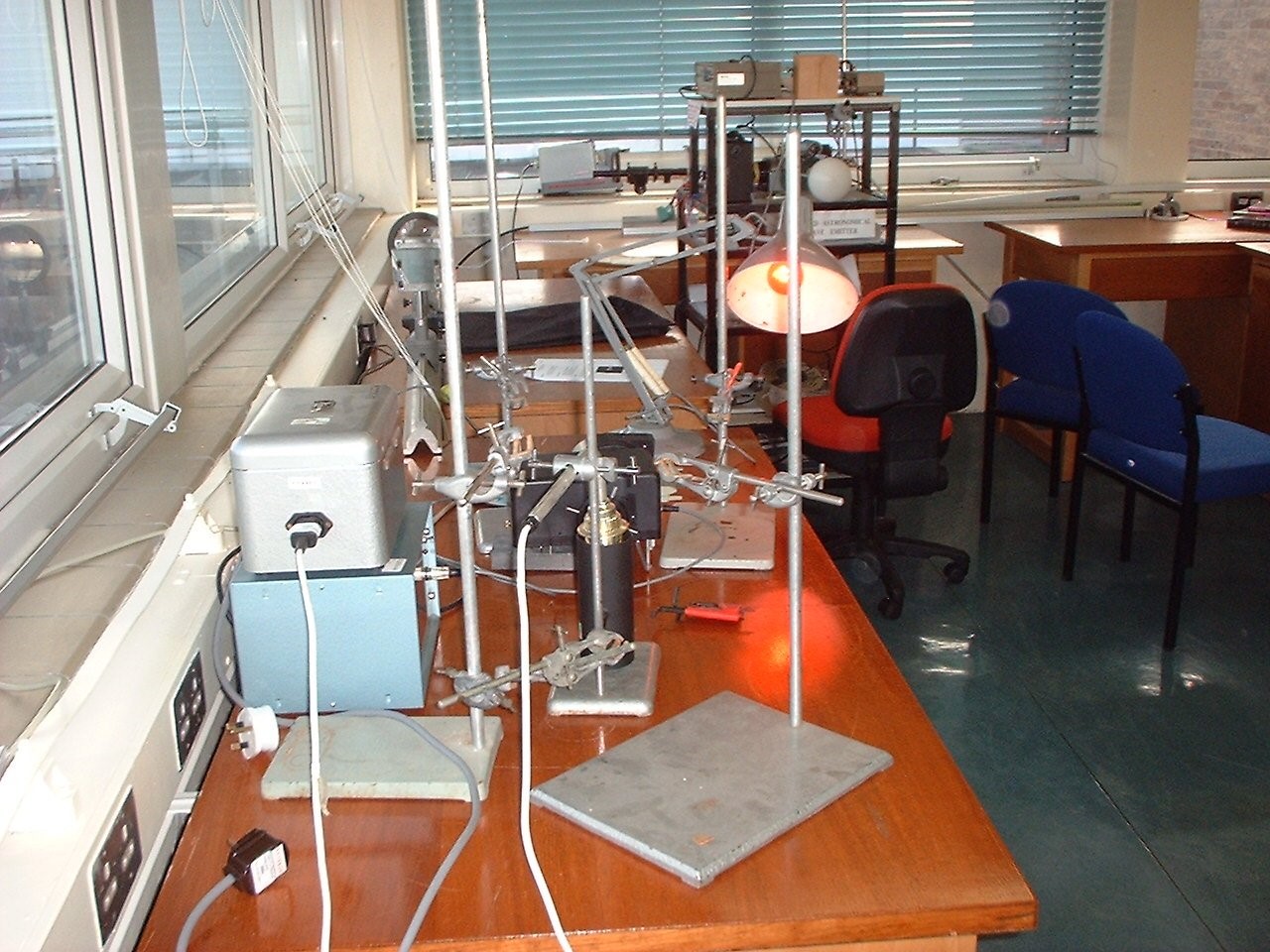
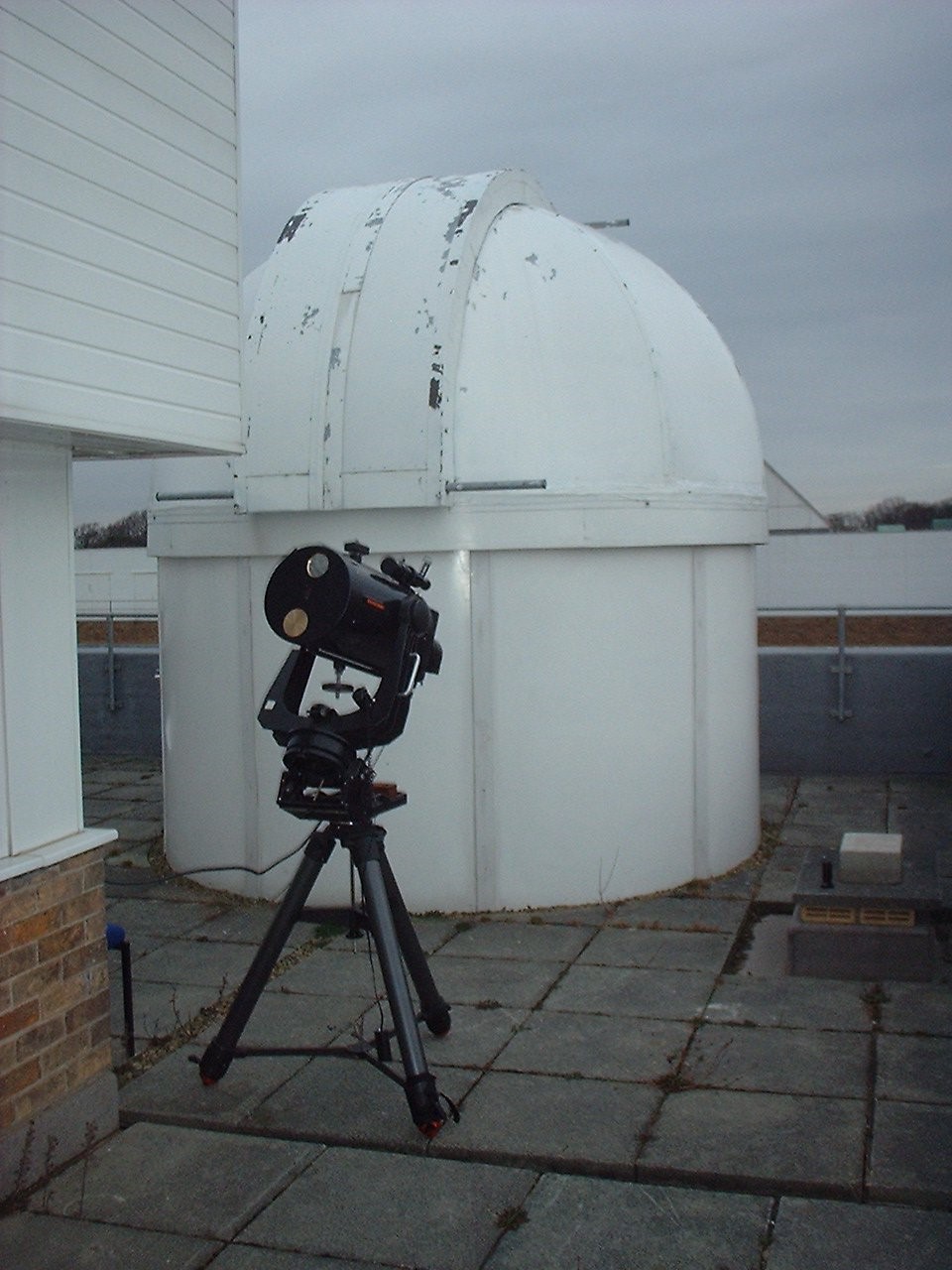
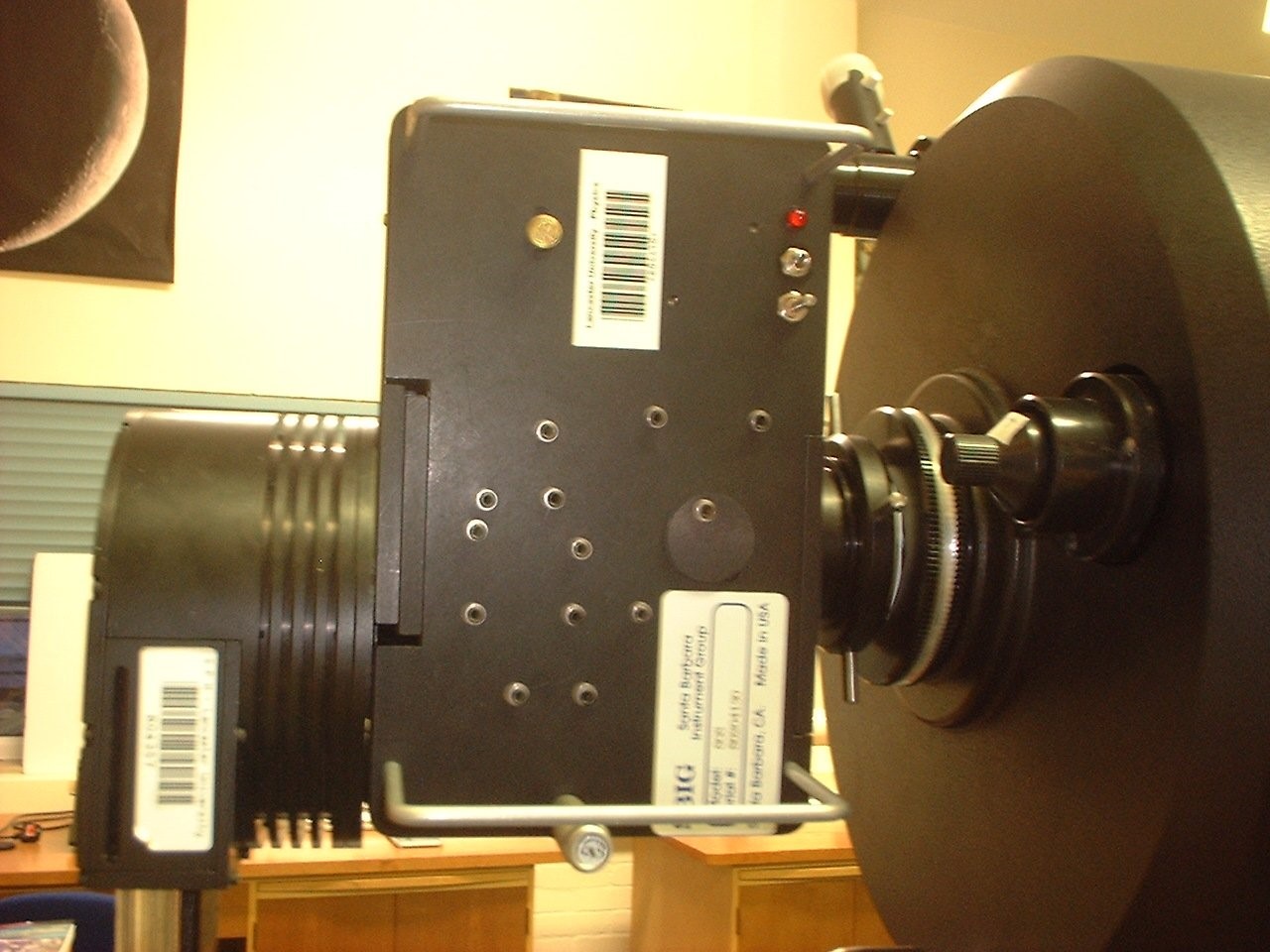
At some point around 2000, Keith Wigmore - the only other person in the Department interested in amateur observation - met Dennis Buczynski (from LAMAS) and Dame Kathleen Ollerenshaw, and it came up that there was her telescope sat at Dennis's house overlooking the Conder Valley, looking for a home... so Dennis and Glynn Marsh (from LAMAS and Preston and District AS) designed the dome structure which was built by Glynn's son who had a farm agricultural building construction business. I ended up designing the mount pillar and connection to SCT fork mount base, aligning then setting the SCT, and arranging the electronic control systems, so that project students could image from the warmth of the lab ... The dome was semi-motorised at a later date. ... We bought the SBIG cameras ... primarily for student projects.
The Dame Kathleen Ollerenshaw Observatory
(2002 - Present)
Following the meeting, the group set to work to establish a permanent observatory for the University. The dome was designed by Dr Glynn Marsh, another prominent local amateur astronomer, and built by his son. The mount pillar and the electronic connections from the telescope to the Astrolab were designed by Dr Ian Bradley. Despite being officially opened in 2002, the observatory was first used a year earlier in 2001 by various MPhys students and several members of staff - its prime use at this stage being CCD imaging (using the SBIG cameras mentioned by Dr Ian Bradley). Between then and 2007, it was further used by MPhys students to carry out more quantitative investigations into variable stars, sunspots, as well as high and low resolution spectroscopy.
On the 20th May 2002, this observatory was formally opened by Sir Patrick Moore. It was named the Dame Kathleen Ollerenshaw Observatory, for her donation of an 11-inch SCT for the observatory. Both had been associated with the University for some time, especially Sir Moore who had been awarded an honorary DSc by Lancaster University in 1974. Also present at the opening were Sir Francis Graham-Smith, the former Astronomer Royal, and Mr. Denis Buczynski, the well-known local Lancaster astronomer, who was both an honorary graduate of the University and an early member of the Society.
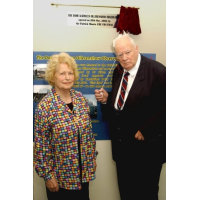
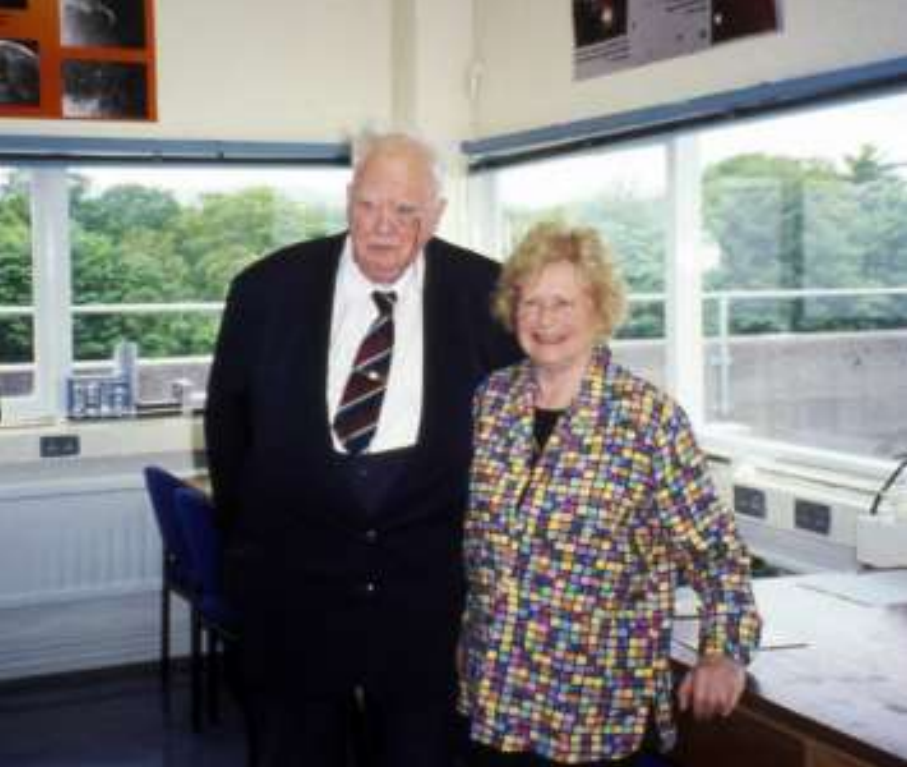
In praising the Physics Department for their initiative in building the observatory, Sir Patrick speculated that a future Astronomer Royal might one day look through their first telescope at the observatory. Thanking Dame Kathleen for donating the telescope and Sir Patrick for opening the observatory, Professor Peter McClintock (Head of the Physics Department at the time) said "that an interest in astronomy was a strong motivation for many students to take physics", with the intent to enhance the teaching of Astrophysics and Cosmology in the Department.
Following the opening ceremony, Sir Patrick gave a lecture entitled 'The Sky at Night' to a packed Faraday lecture theatre, in which he described highlights of Man's exploration of the solar system. As a token of appreciation for his visit, Sir Patrick was presented with a laser pointer by Professor Keith Wigmore (Physics Department). Sir Patrick was later guest of honour, together with Dame Kathleen, at a dinner in Cartmel College.
I am over the moon and half-way to Mars at having an observatory in my name ... I think Lancaster University Physics Department will become very famous for the research it is doing.
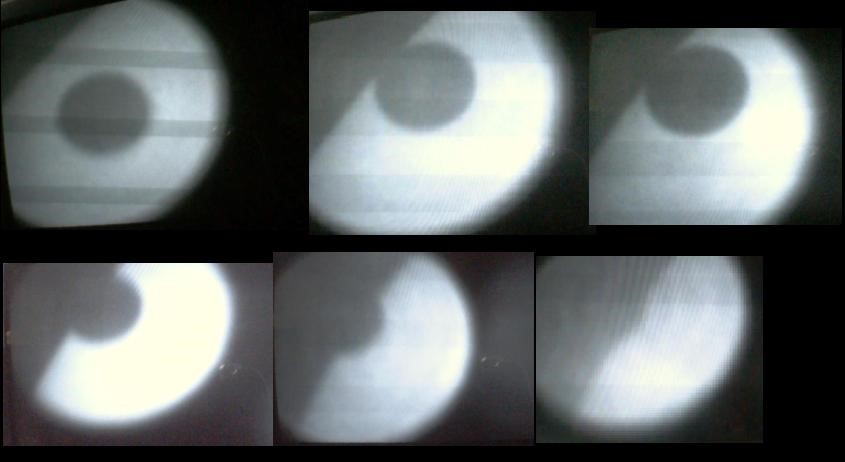
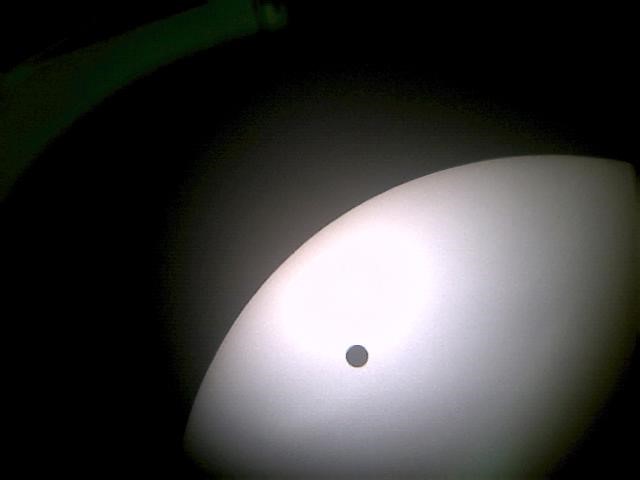
One of the people to use Dame Kathleen Ollerenshaw's donated 11" SCT was the then-Masters student, Dr David Boyce. He used it for his MPhys project looking at Zeeman Splitting in the spectra of sunspots, back in 2004. On the 8th June 2004, himself, alongside Dr Ian Bradley, successfully used the telescope to observe the transit of Venus across the Sun - an exceedingly rare event that had previously happened 122 years prior, and will next happen from the 10th-11th December in 2117! The group even managed to use this event to detect the atmosphere of Venus.
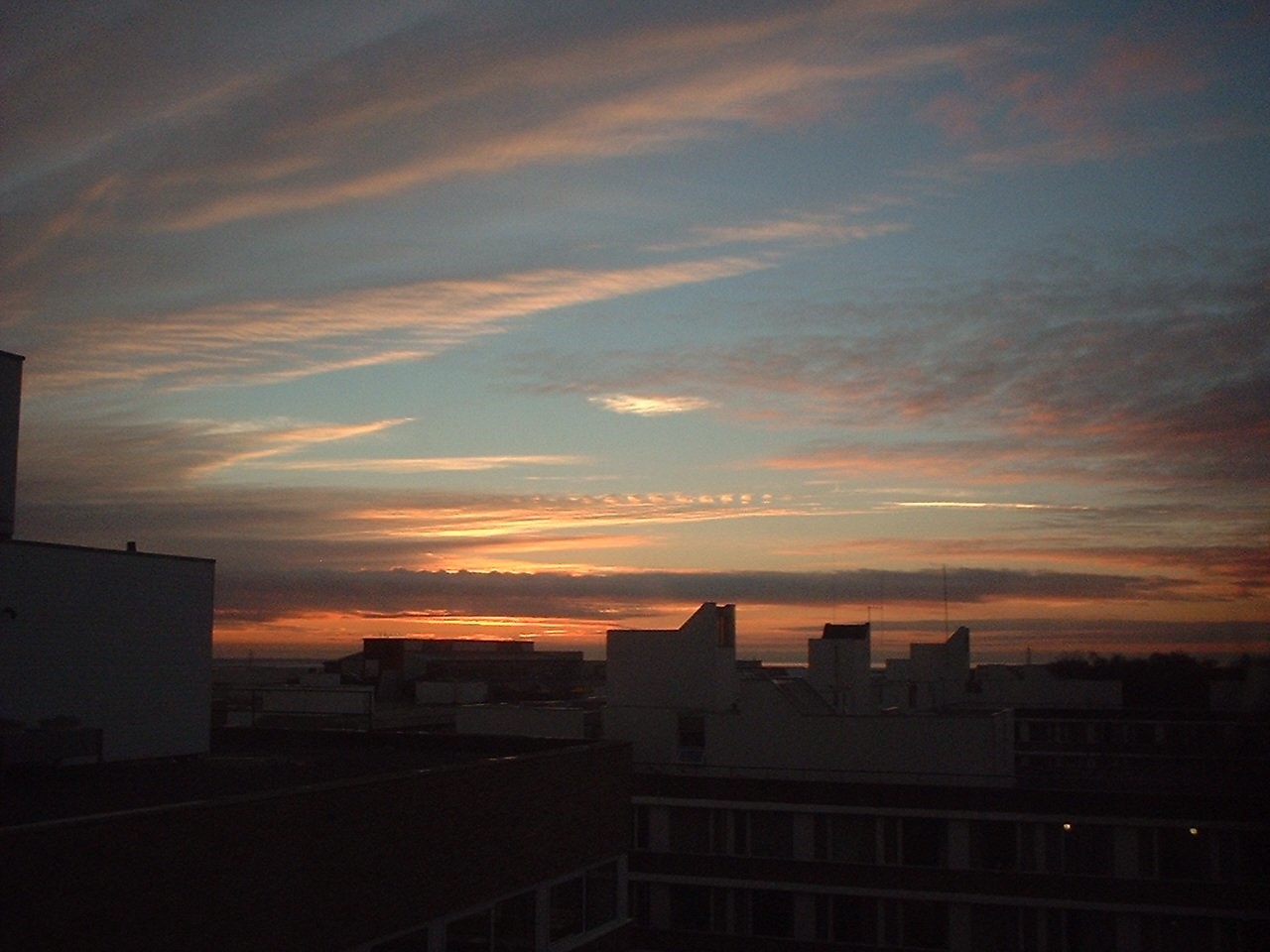
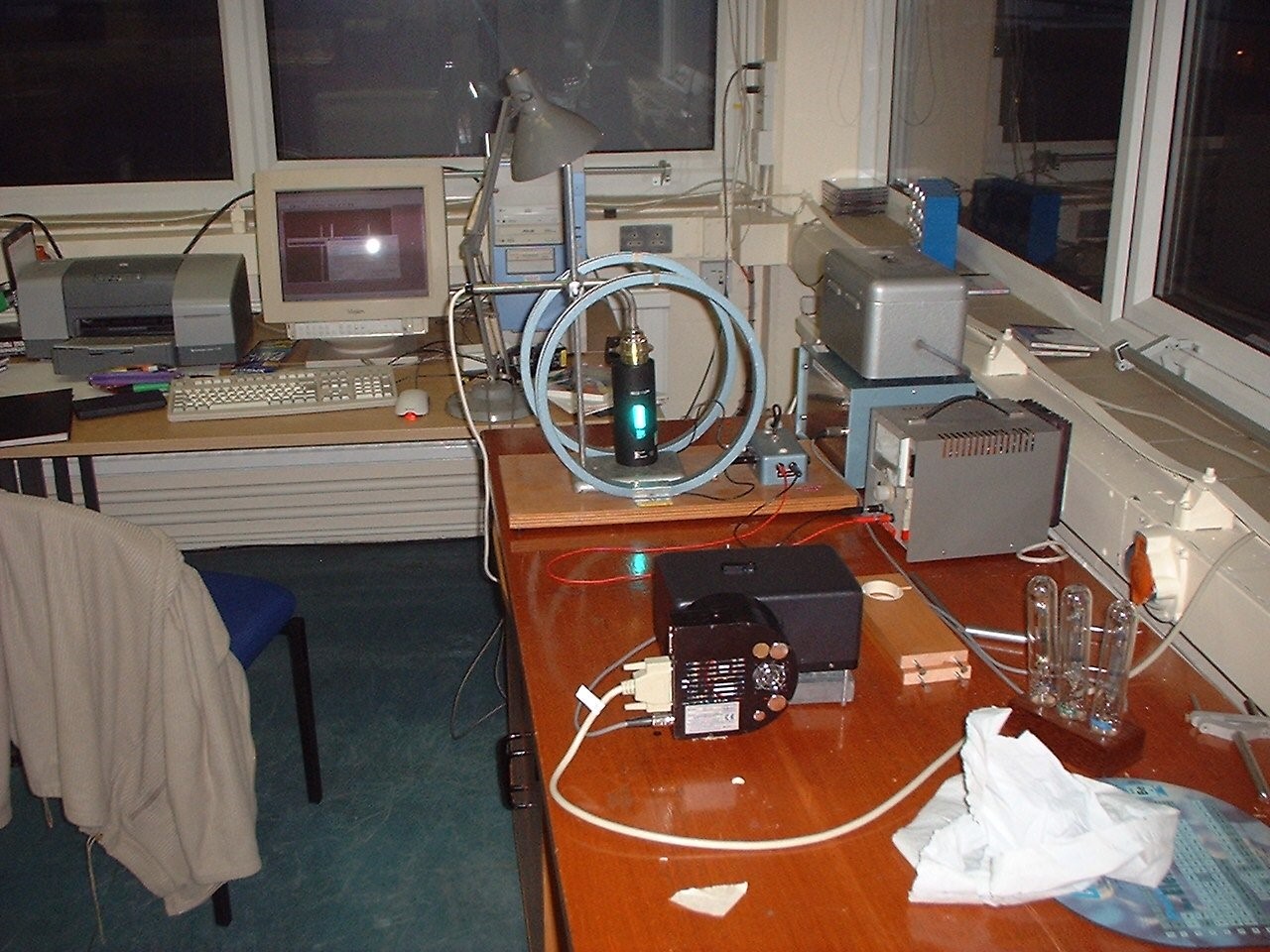
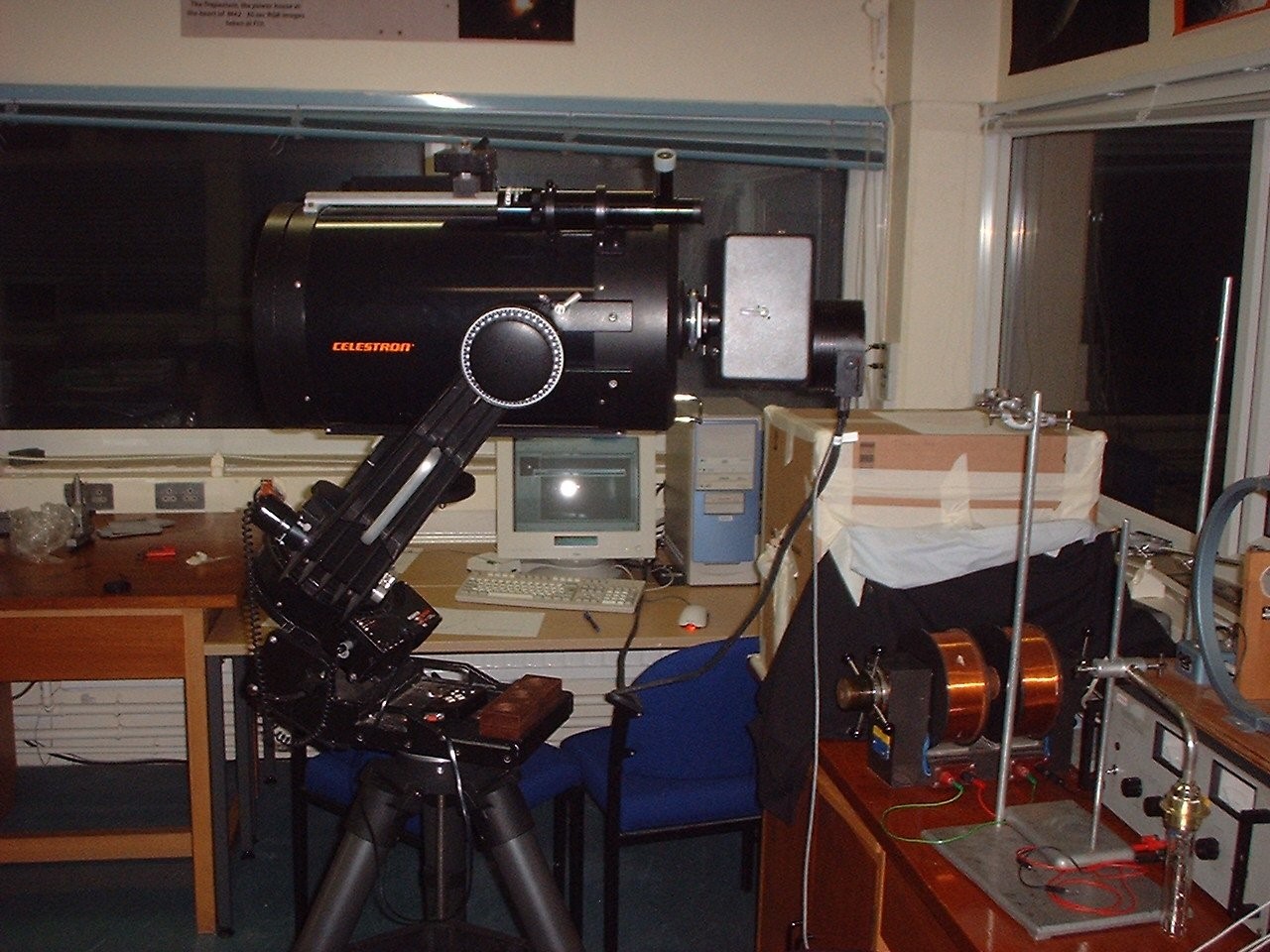
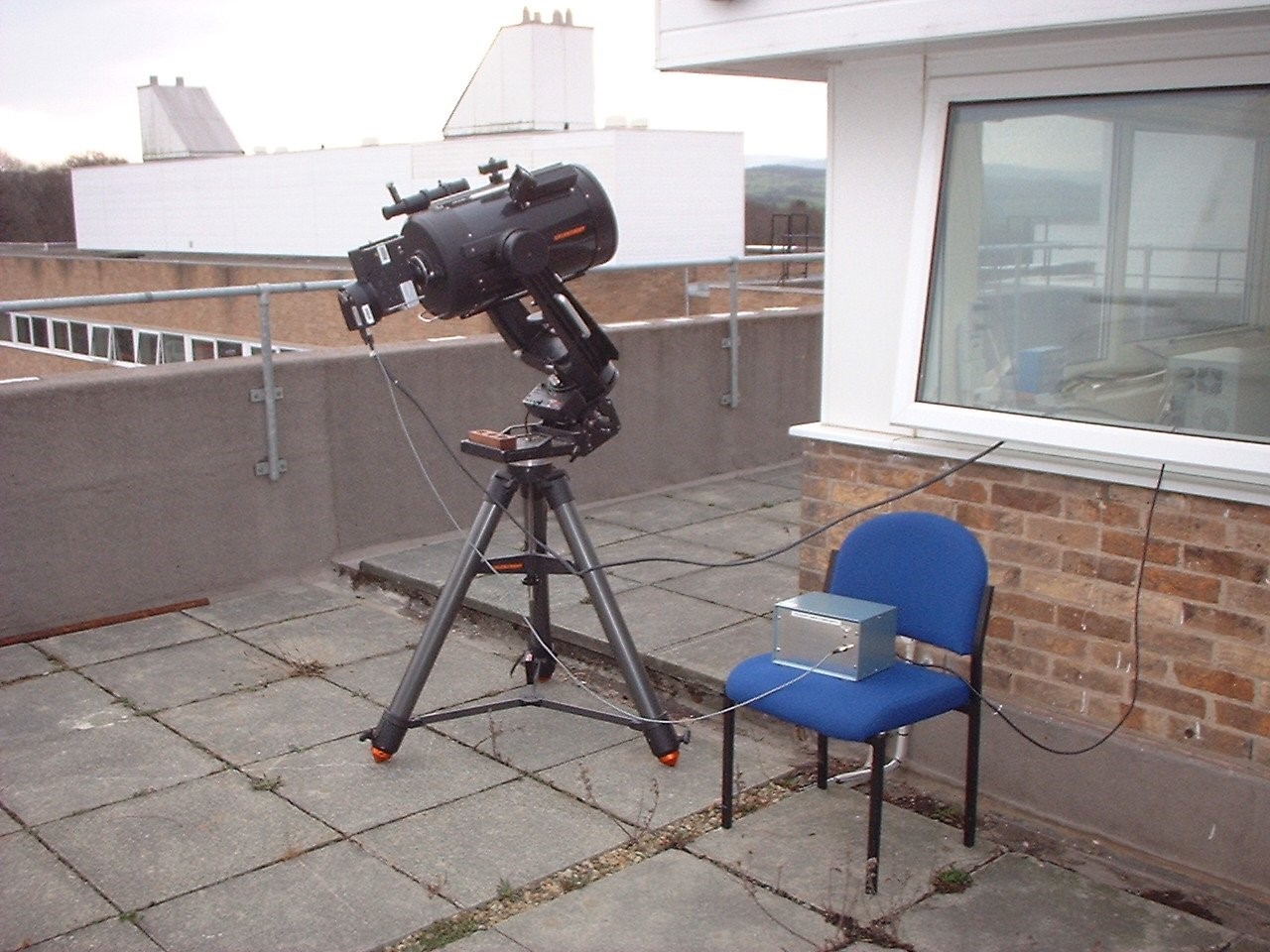
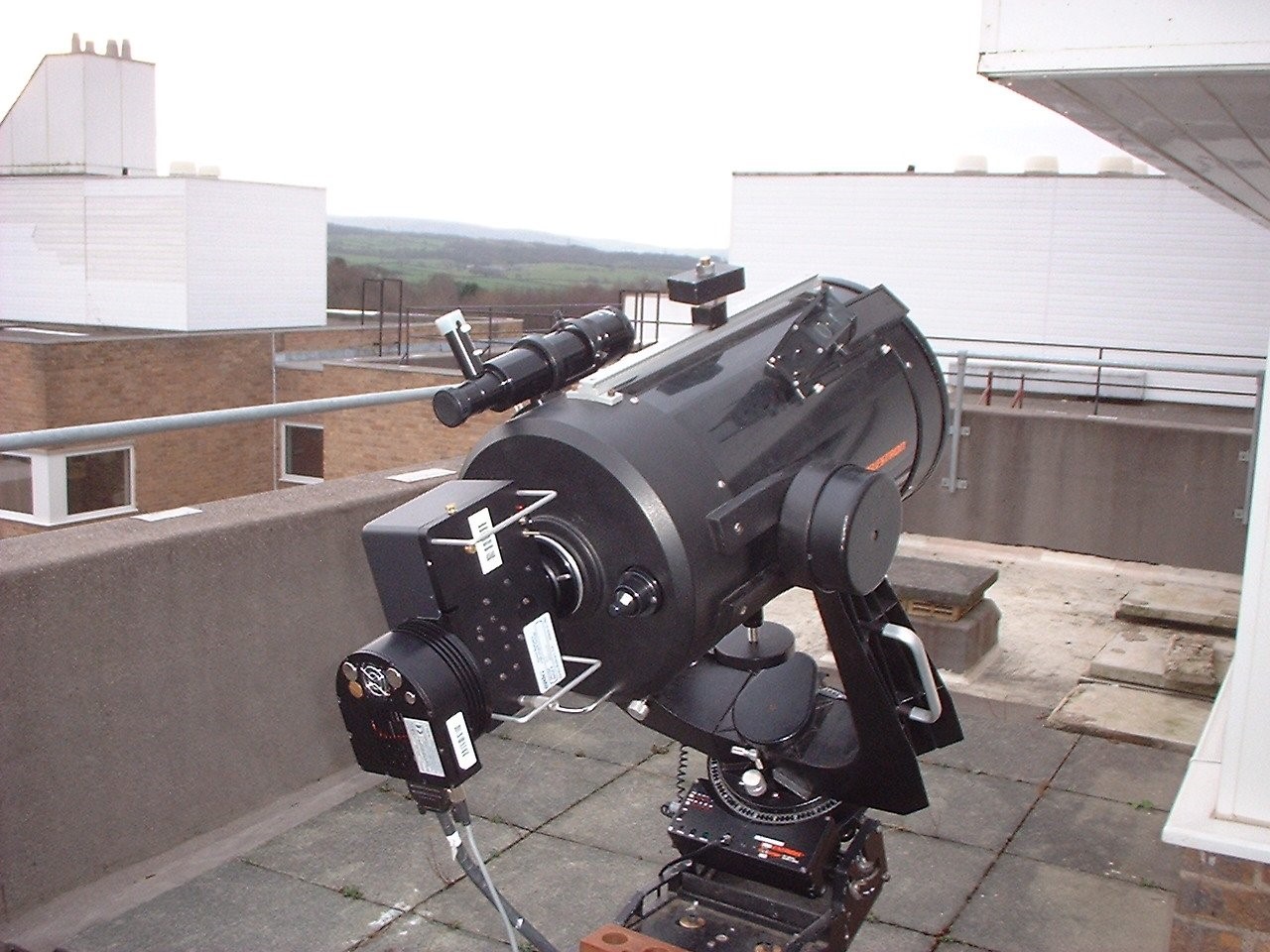
Over a decade later in 2015, the University's Observational Astrophysics Group was set up; a modern replacement for the University's previous Lunar and Planetary Unit, as well as combining other related areas of observational astronomy. Today, the Observatory has seen use by lots of MPHYS Astrophysics students at the University, by members of staff, and of course, by members of LUAstro.
New Beginnings
(2017 - 2020)
In late 2017, Antonio Coulton, a Physics student at the University, restarted the society in its current form, running it as President from October 2017 to June 2020. This cemented LUAstro as an independent group within the university's Student Union, established regular events and socials for the group, and gave LUAstro a more active presence within the university and the Department.
This time also marked a period where the Dame Kathleen Ollerenshaw Observatory was redone significantly - replacing its original 11-inch SCT with a larger 14-inch equivalent, improving camera systems with new RedCat cameras, and encouraging its more active use. The 14-inch SCT is still used today, with the original 11-inch SCT that Dame Ollerenshaw donated kept securely in Astrolab.
Dr David Sobral, an Astrophysics lecturer at Lancaster University from January 2016 to August 2022 and discoverer of the CR-7 galaxy, organised and ran a series of Astrophysics conferences, student internships, and other events for the newly-setup Astrophysics group at the Department from 2017-2022; the details of which can be viewed on his Wordpress site at www.xgalweb.wordpress.com. As part of this, he also led the creation of "NLUAstro" - Notices of Lancaster University Astrophysics. Copies of the first two volumes of NLUAstro can be viewed and downloaded HERE.
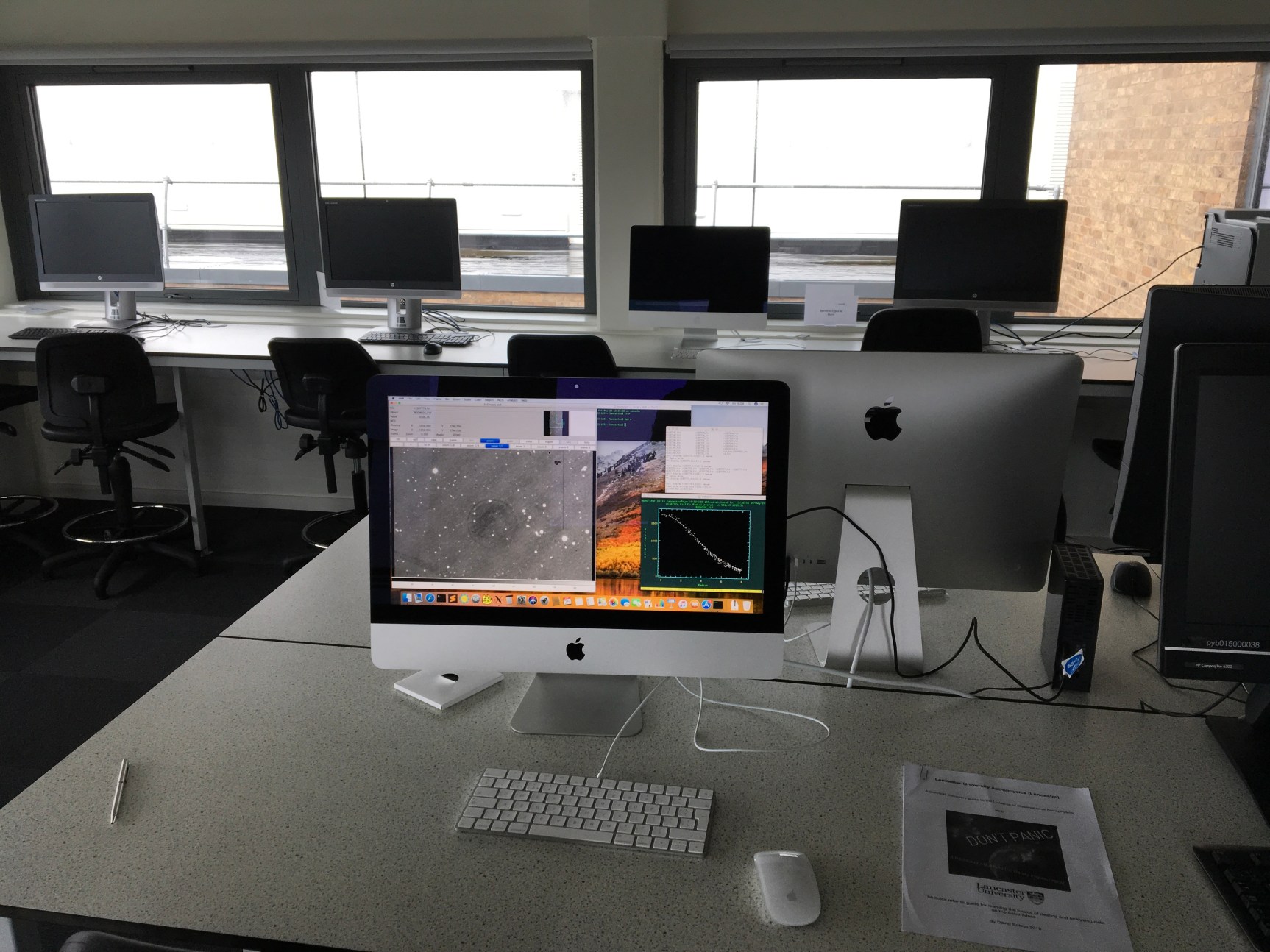
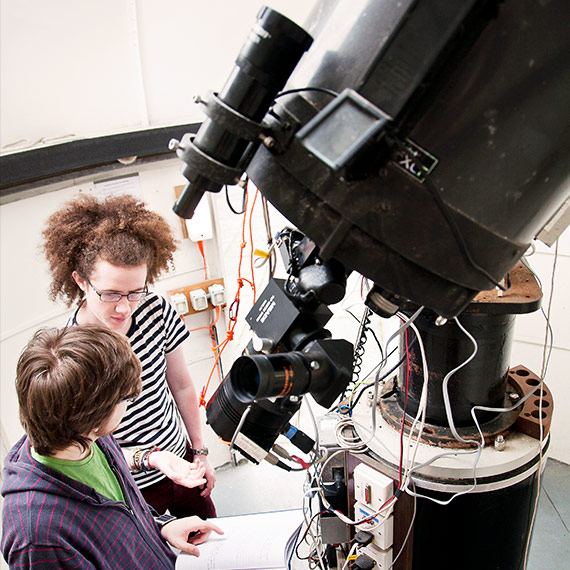
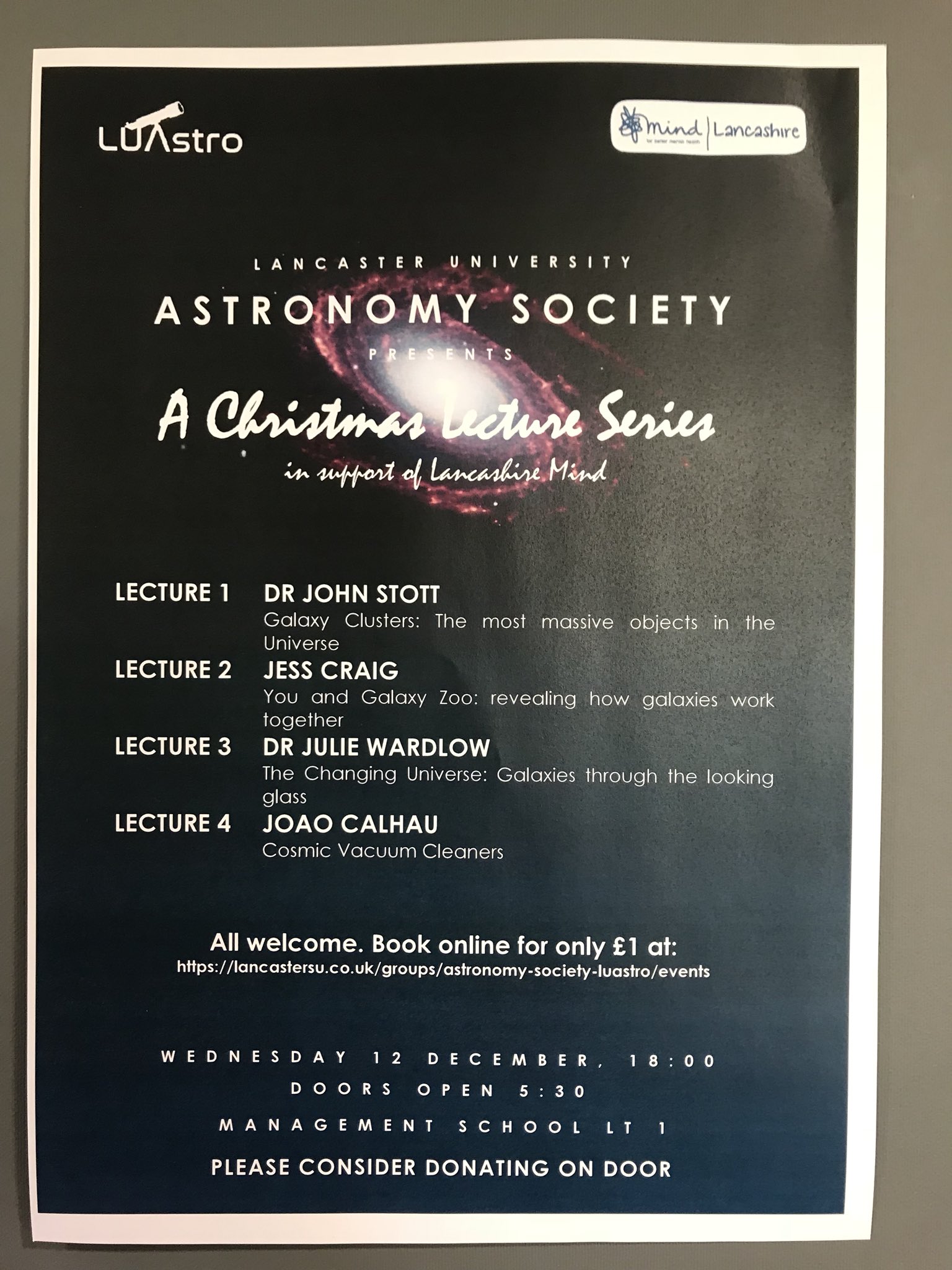
One of the first larger events of the restarted LUAstro society was on December 12th 2018, where the society held a Christmas Lecture Series in support of the charity Lancashire Mind. The series consisted of talks by Dr John Stott and Dr Julie Wadlow (both Astrophysics lecturers at the university), alongside talks by Jess Craig and João Calhau. The poster for the event is shown below, with the event itself raising £68.66 for the charity by the following day.
The more successful events from 2018-2019 were recorded as articles by the society. All of which can be viewed by clicking on the appropriate links on the Newsletters page.
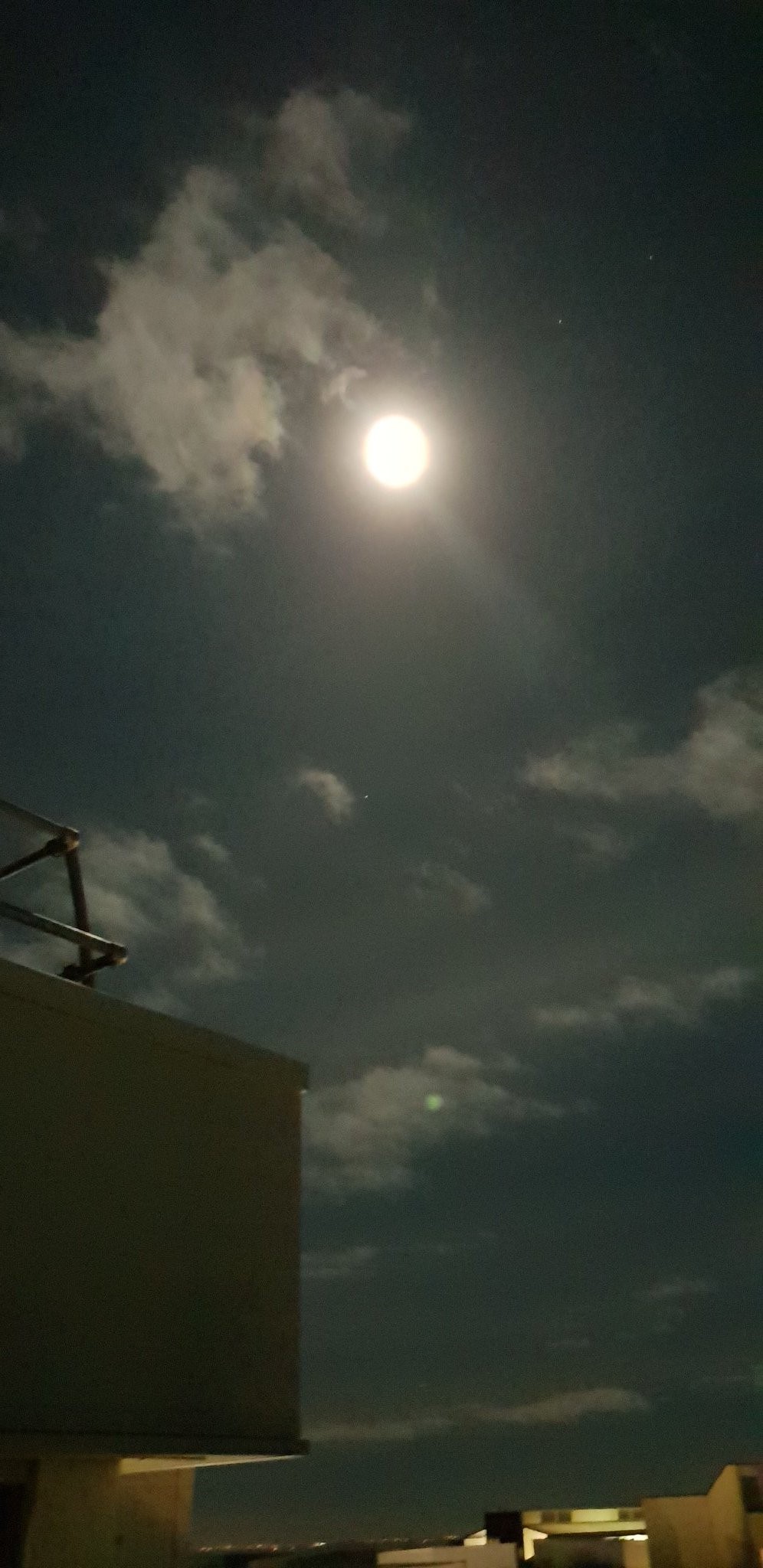
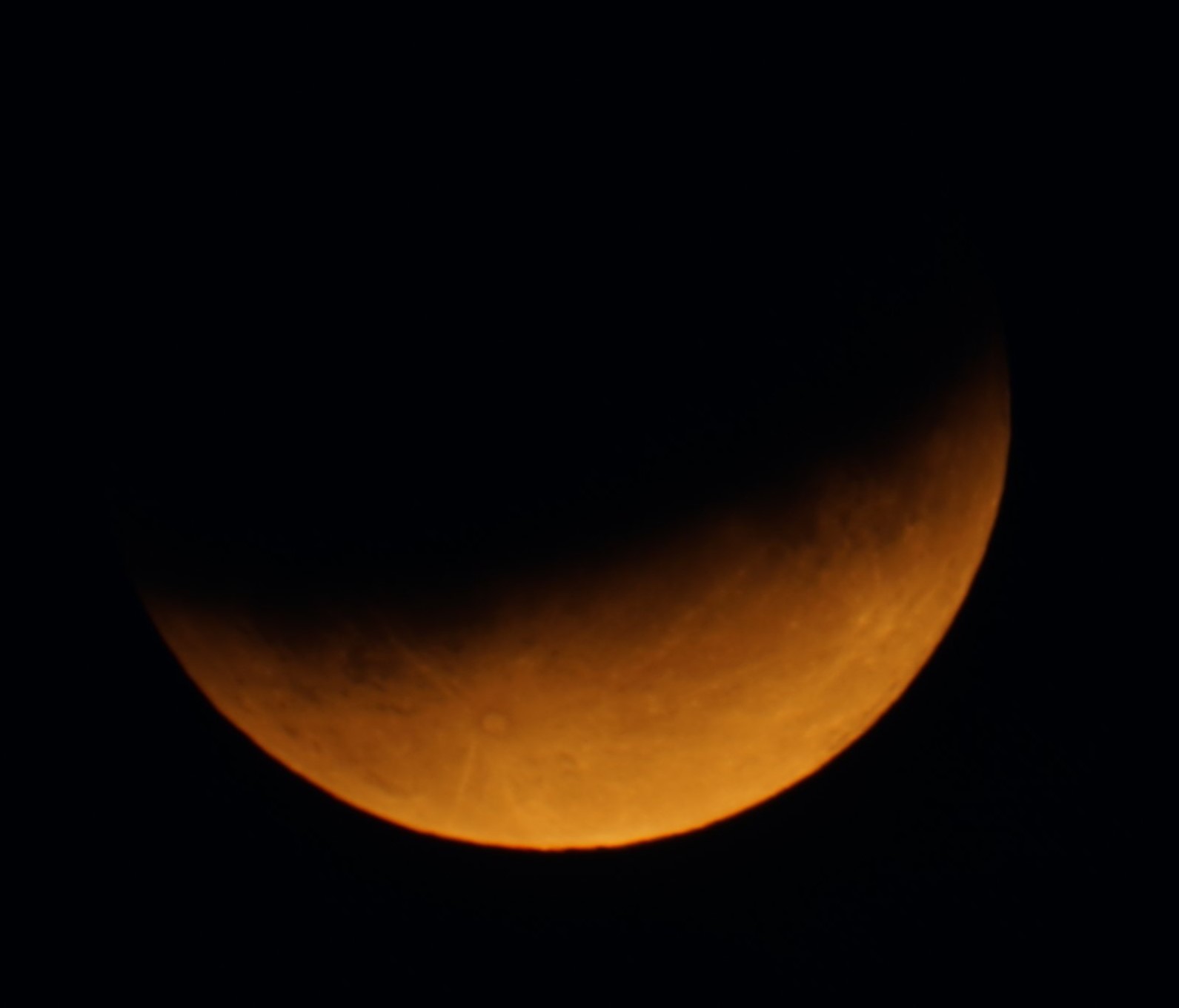
The Lunar Eclipse on January 21st 2019, in paricular, was a great success for the society. Clear skies on the day allowed members to take excellent photographs of the eclipse.
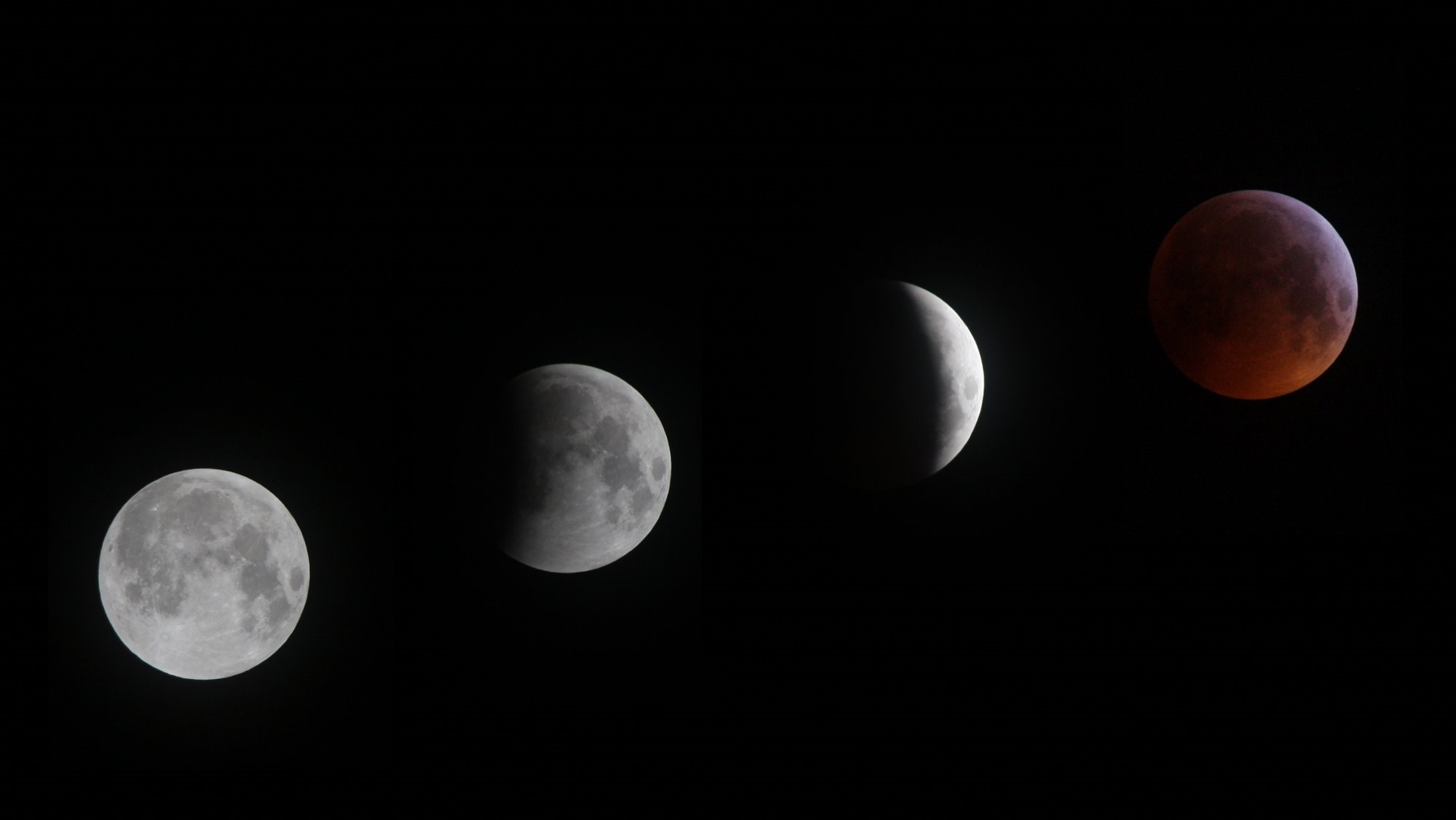
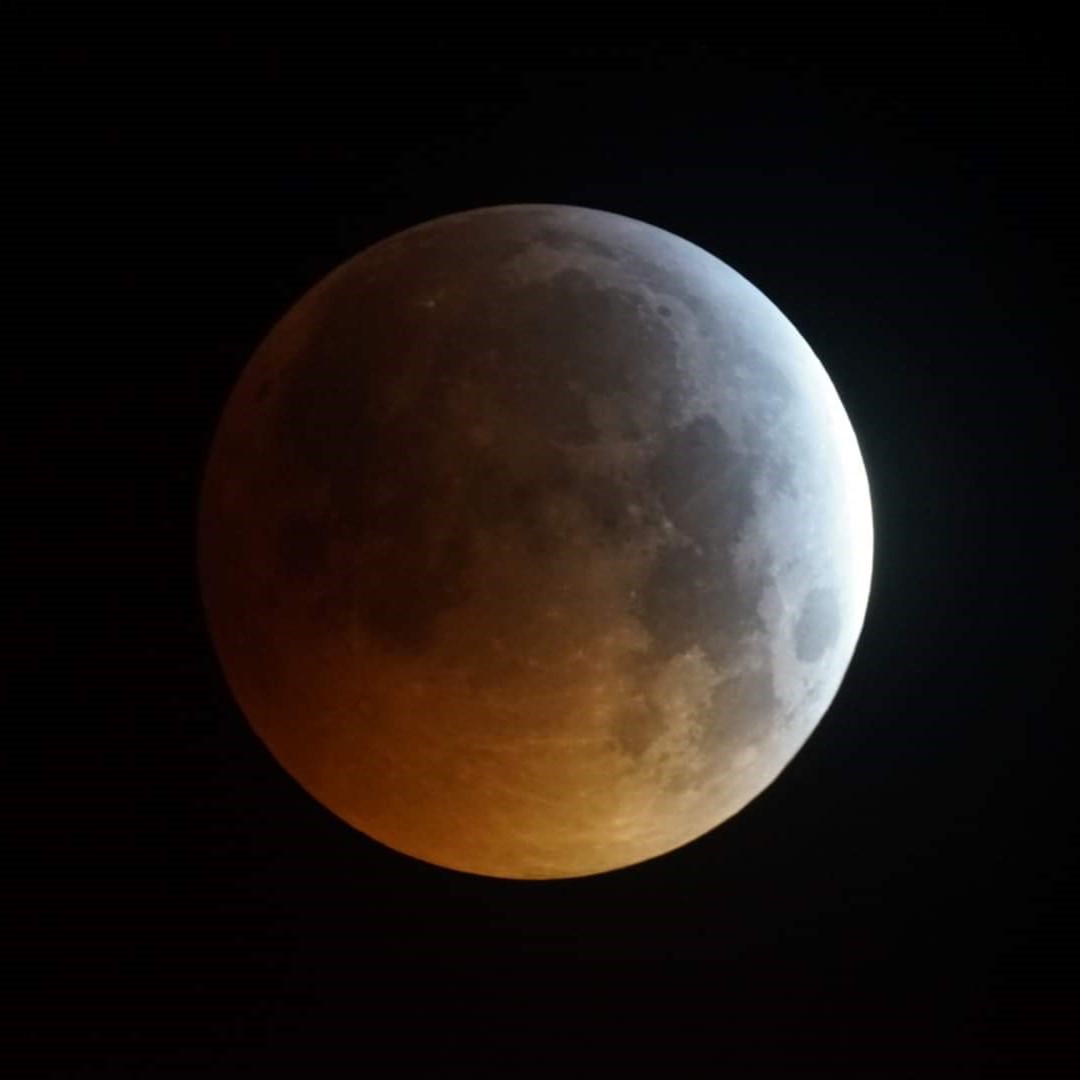
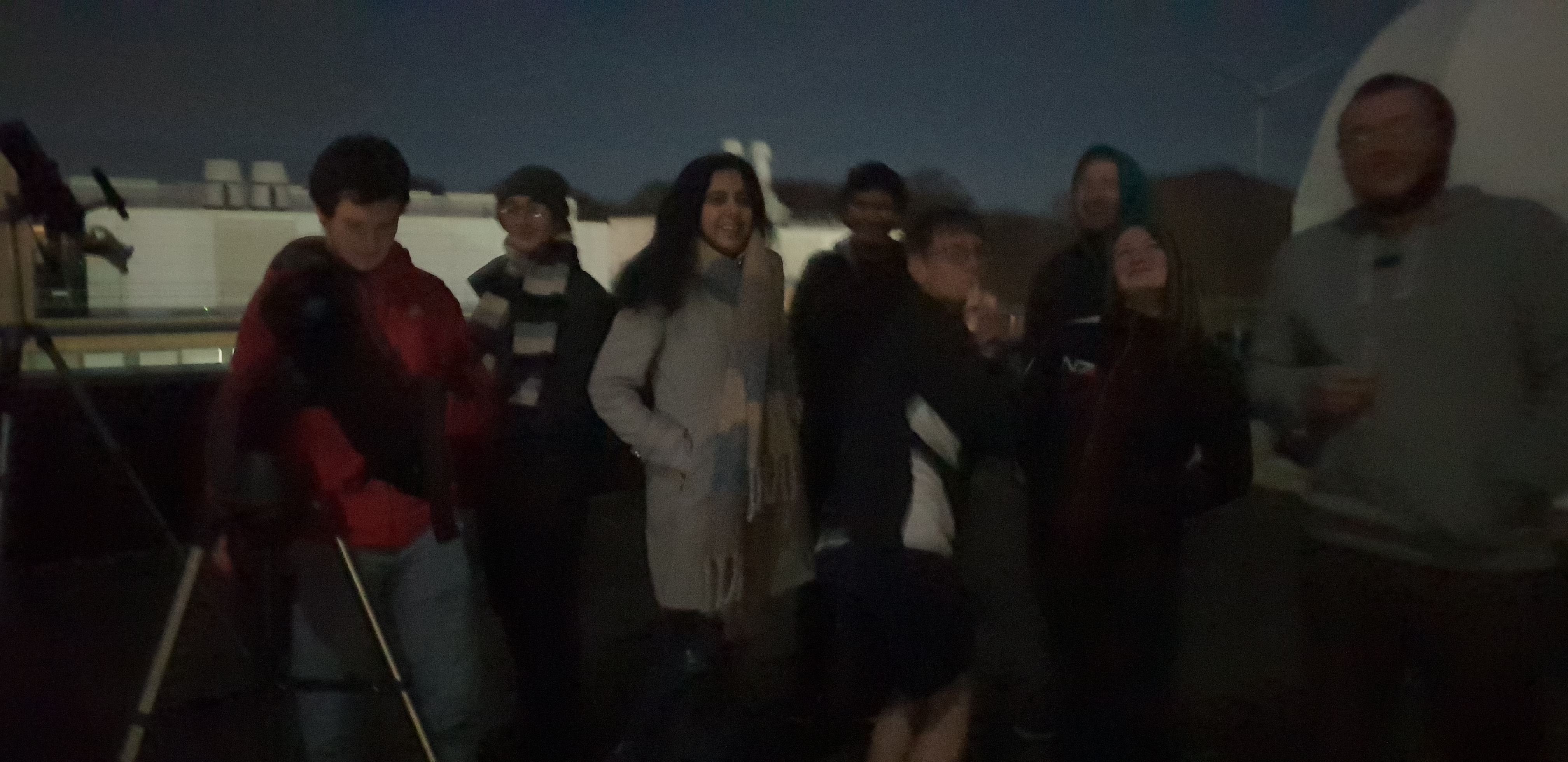
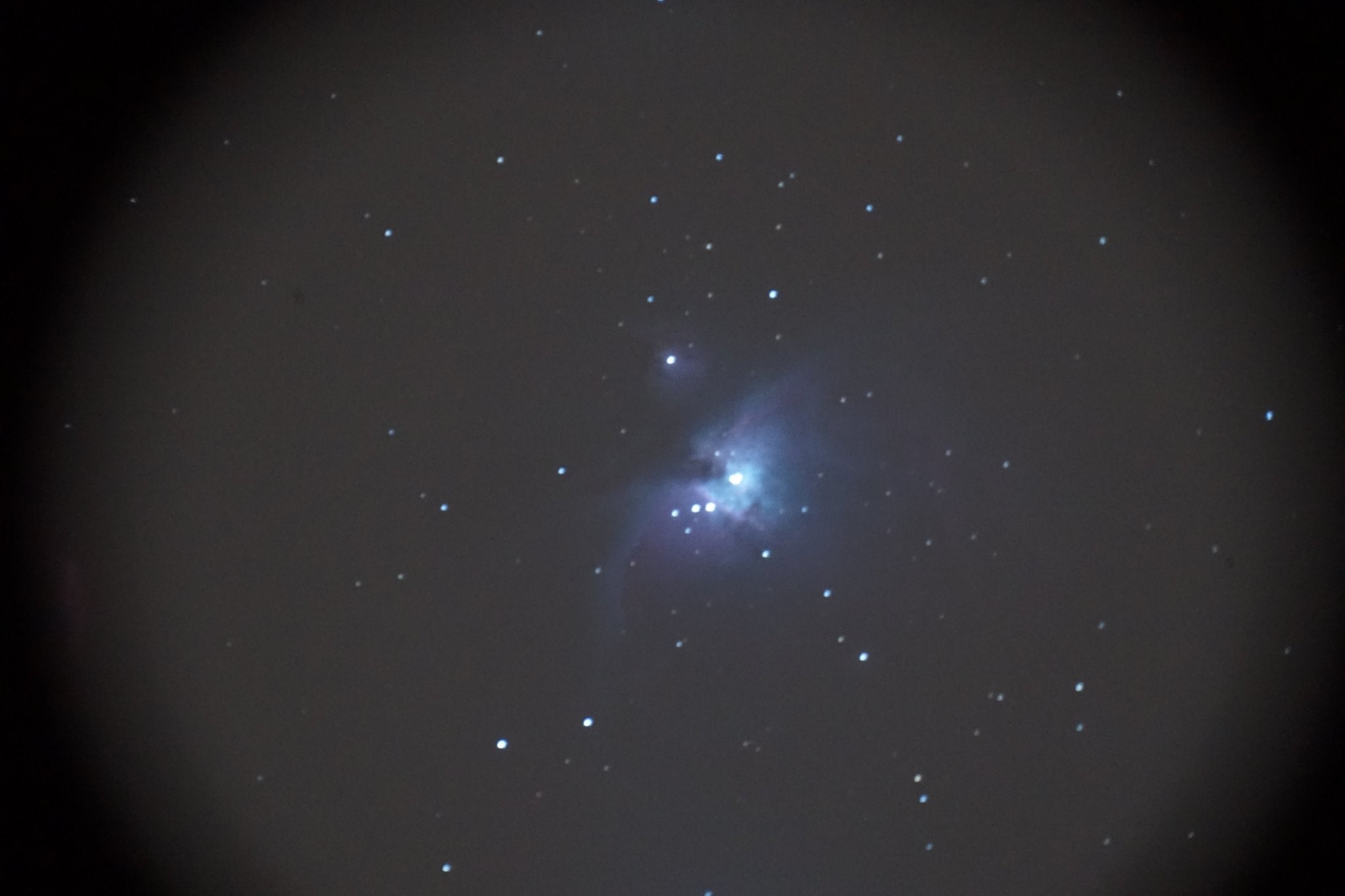
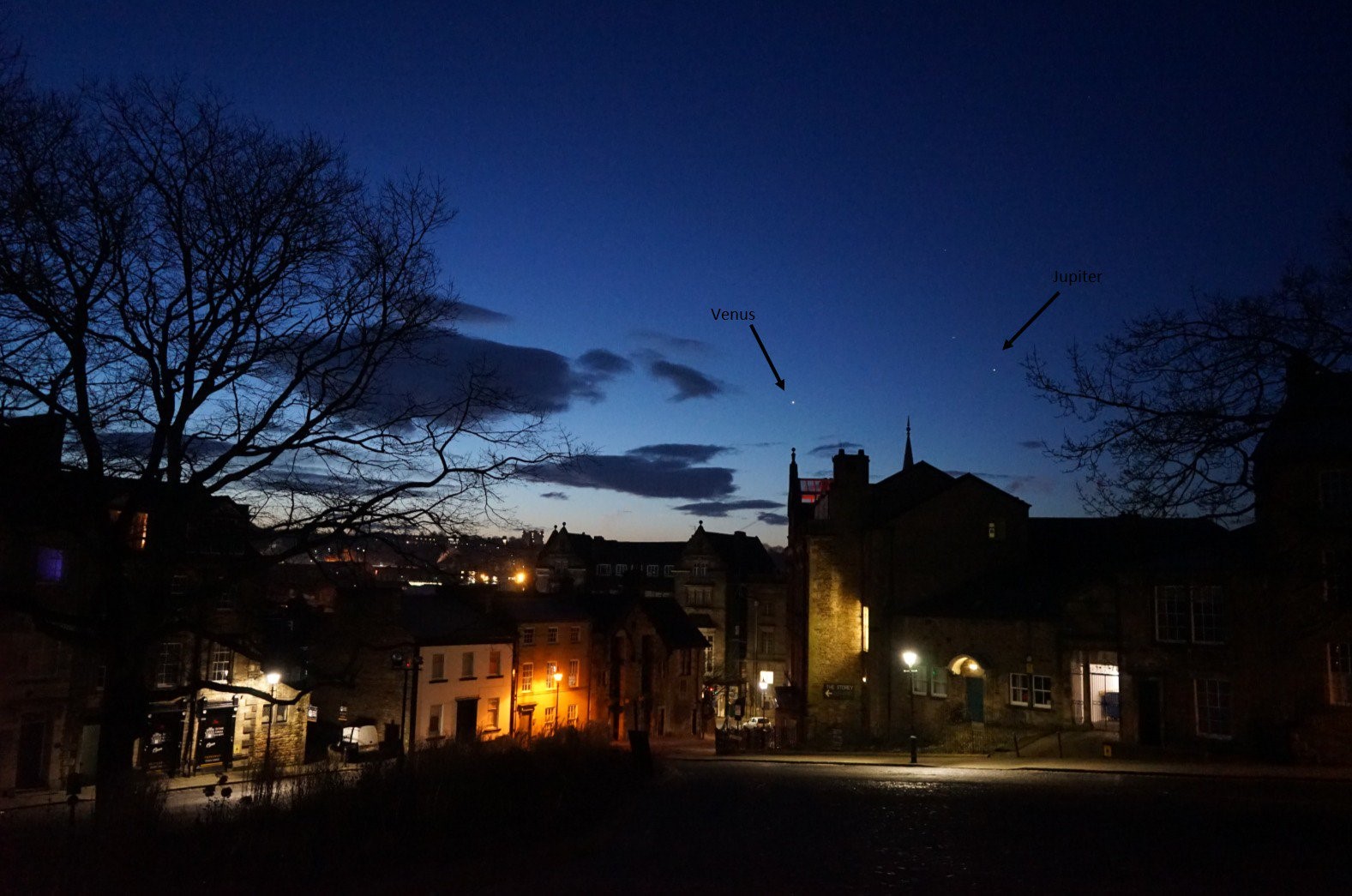
LUAstro held an Observing Night 10 days later, on 31st January 2019. Although the seeing conditions were not ideal, the society still managed to get a photo of M42, the Orion Nebula, from outside Bigforth Barn. Later, on the 2nd February 2019, the society also observed a rare conjunction of the Moon, Saturn, Jupiter, and Venus.
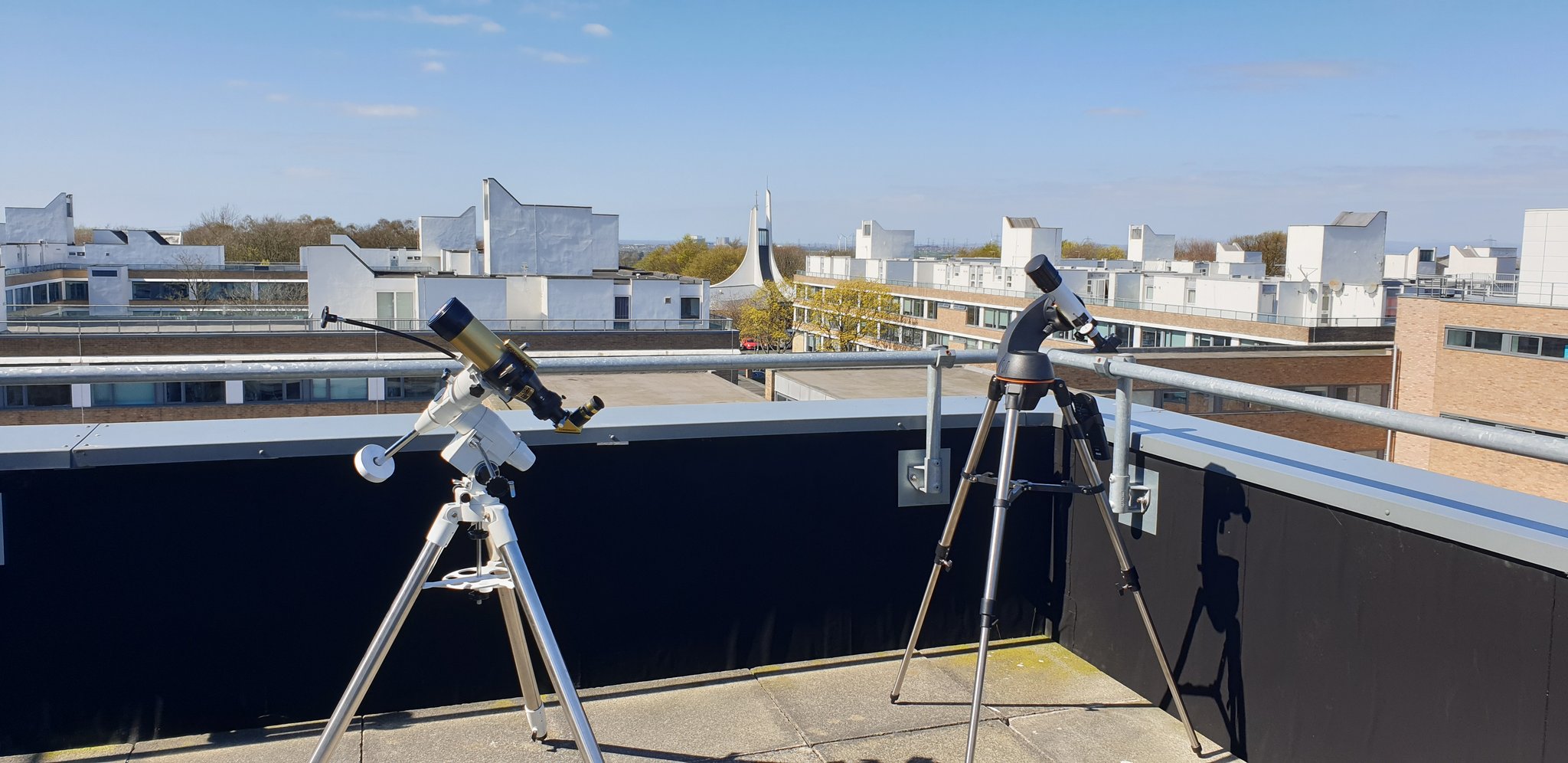
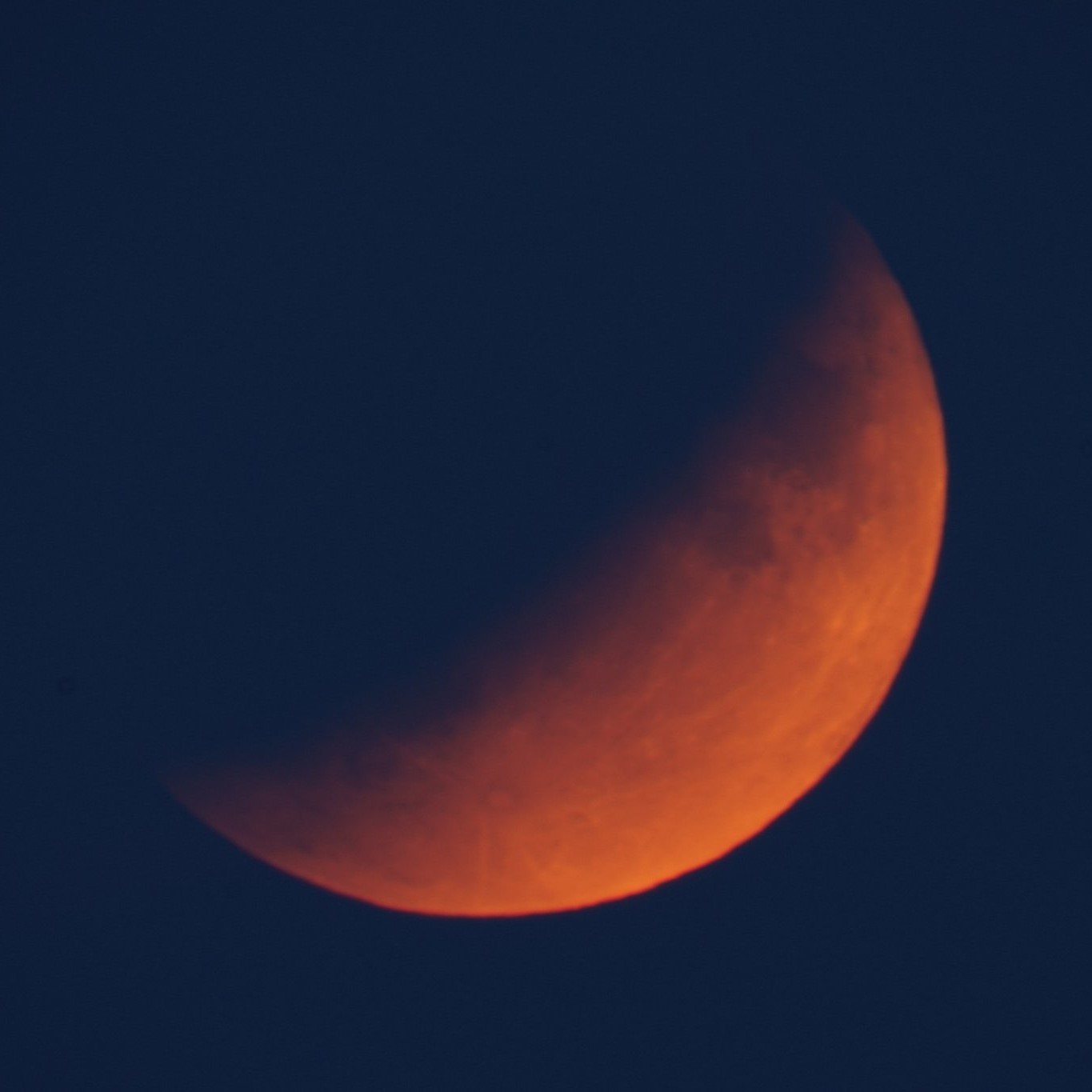
Some following events later that year included a Solar Observing event on 10th April, and an Observing Night to view the partial Lunar Eclipse on 16th July.
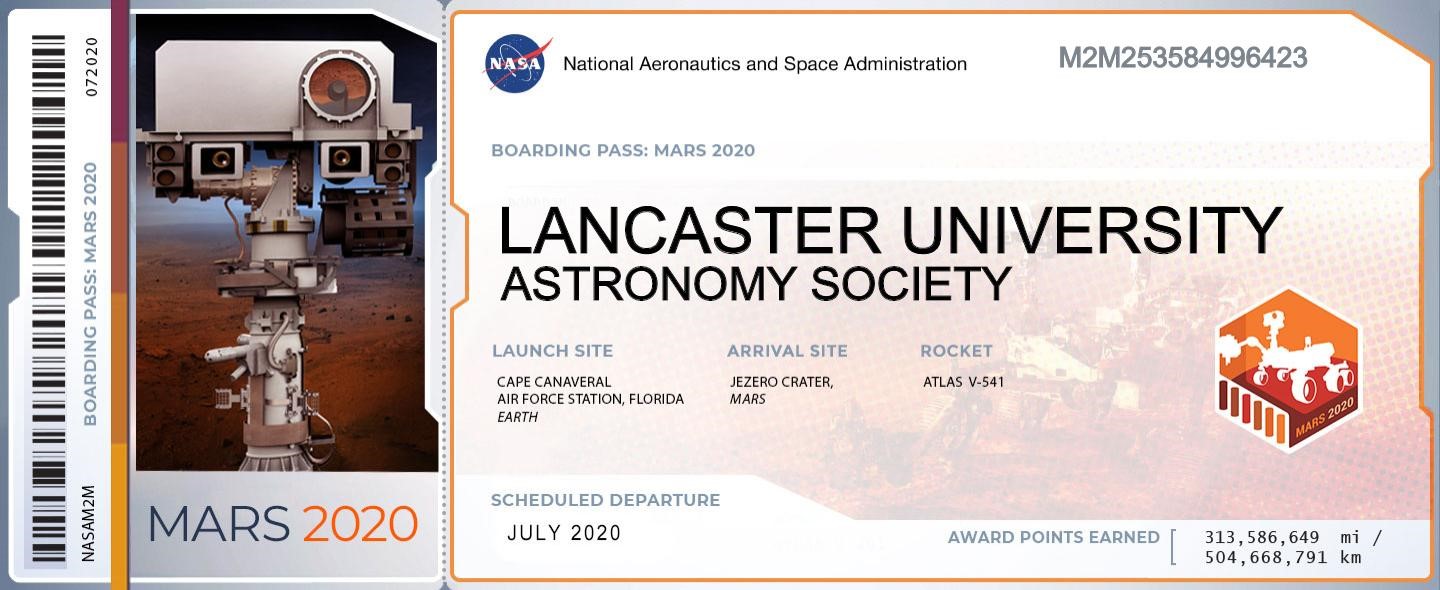
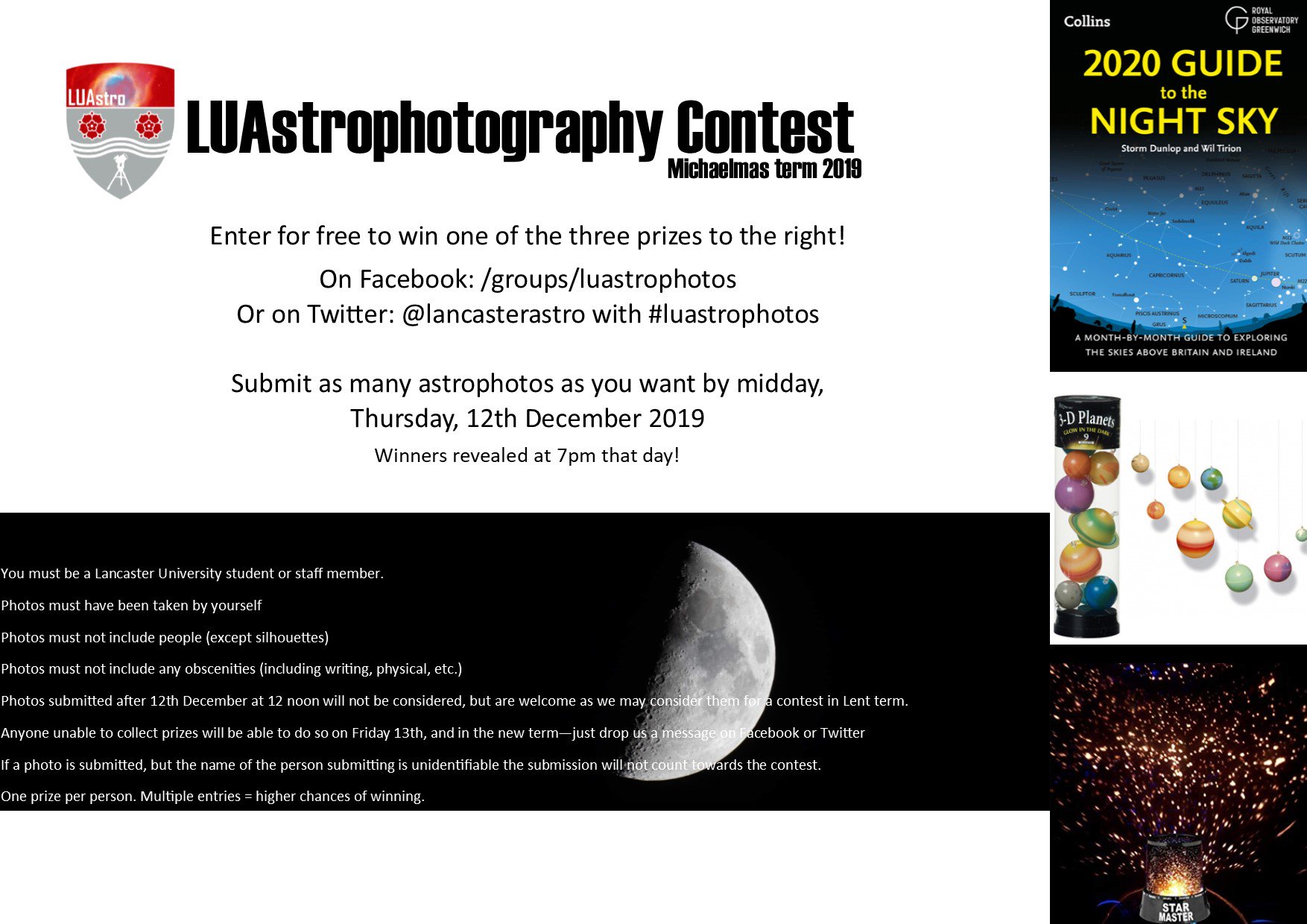
On 15th August 2019, the society updated its logo to the newer design shown below (from its original NASA-text-style version). Around 25th September, the society announced an "LU Space Program" (where the society would attempt a series of fun rocket launches) alongside getting LUAstro's name onboard NASA's Mars 2020 rover. An Astrophotography competition was also held from 12th October, to the end of the Michaelmas Term (later being extended to the 30th January the following year).
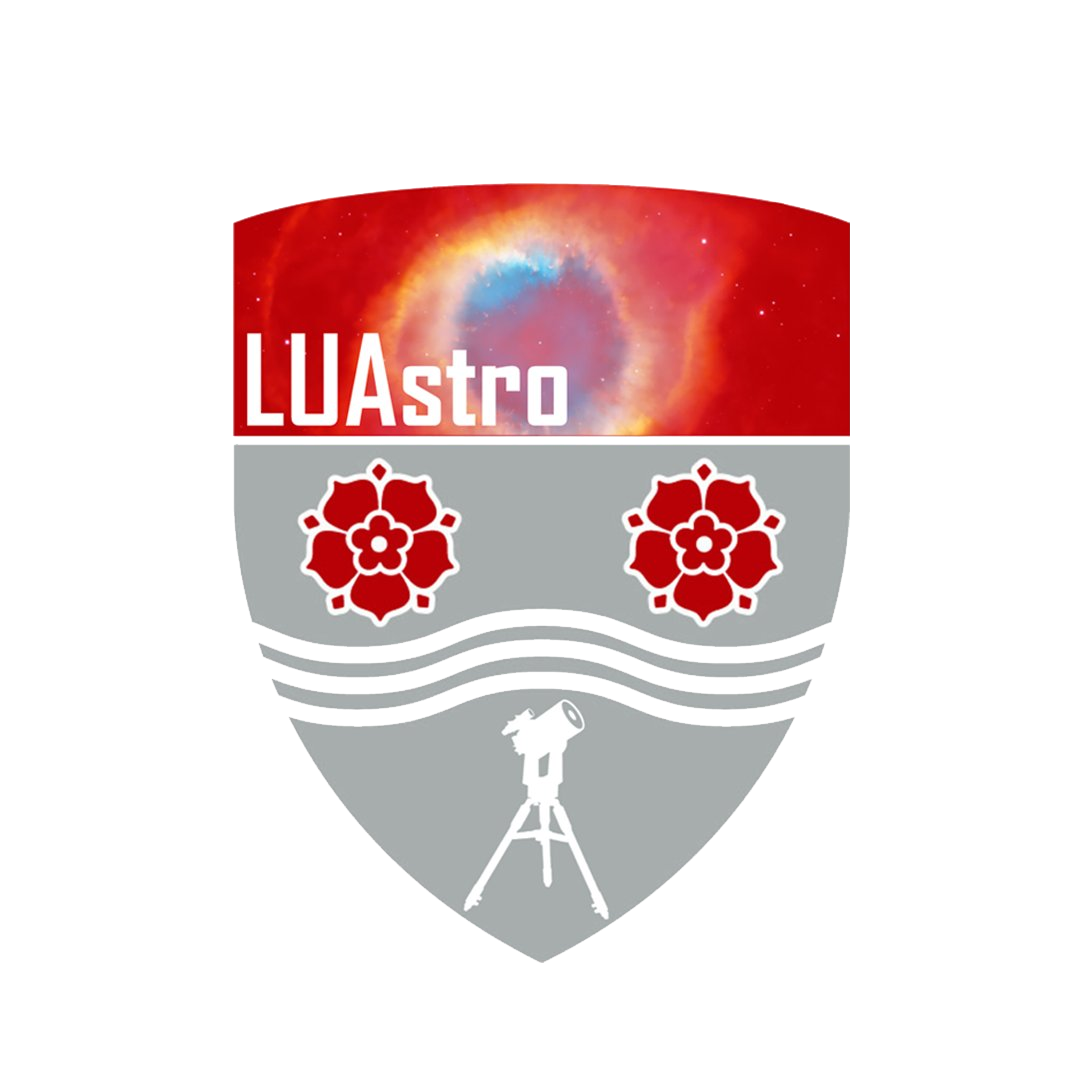
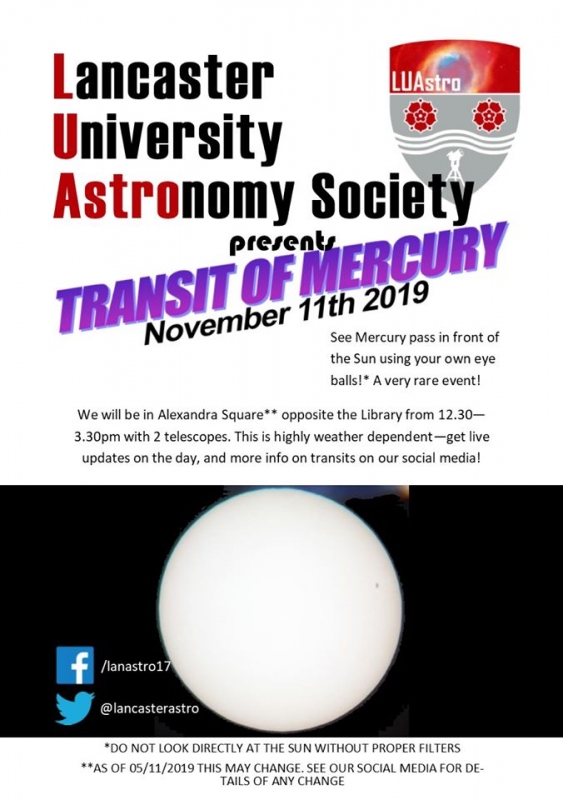
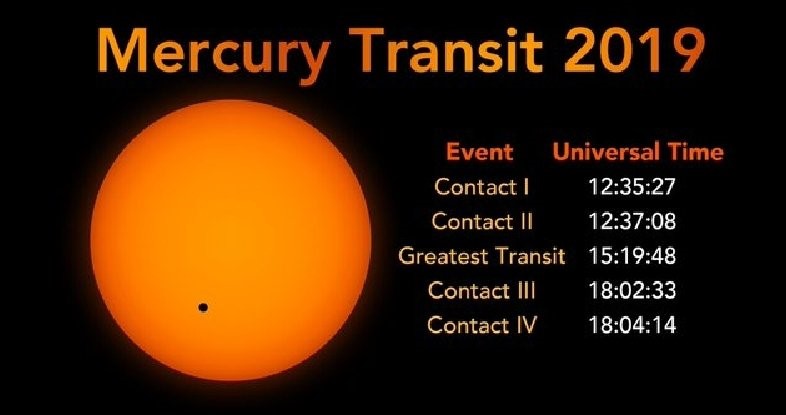
The enthusiastic exec at the time planned a viewing of the Transit of Mercury on the 11th November 2019; writing an article for the LUSU site, creating a Facebook group, an advert to encourage astronomers from outside the university to attend, and a flyer and infographic on the event (shown below). Unfortunately, rain and clouds prevented it from being seen from Lancaster.
LUAstro Space Program (2019-2022)
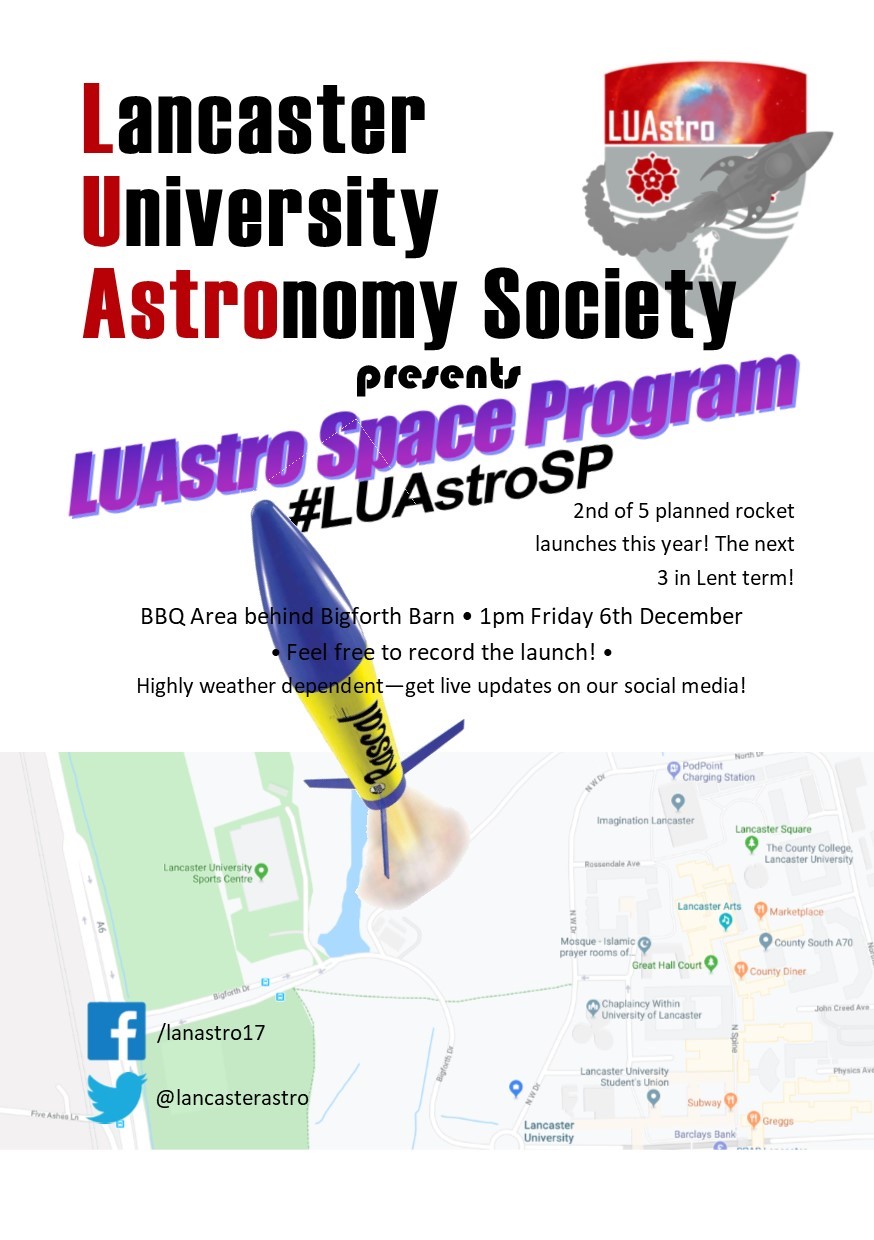
Inspired by a variety of space missions at the time, the exec decided to create some of their own! The "LUAstro Space Program" involved several rocket attempts over late 2019 and early 2020. The first rocket launch took place on the 22nd November 2019 at 11:30am. The launch was a partial success as although the rocket took off perfectly, its parachute failed to deploy. The event took place outside Bigforth Barn, where the society had taken to hosting Observing Nights previously in the term.
The results of the first launch can be seen on our YouTube channel by clicking HERE.
The second rocket launch was scheduled for the 6th December 2019 at 1pm, later being pushed forward to 3pm, pushed forward even further to the 13th December, before being (you guessed it) delayed until the following term due to poor weather on the launch day! The exec at the time considered that, other than more poor weather, nothing could hold the LU Space Program back much further. Unfortunately, a certain coronavirus pandemic proved that wrong...
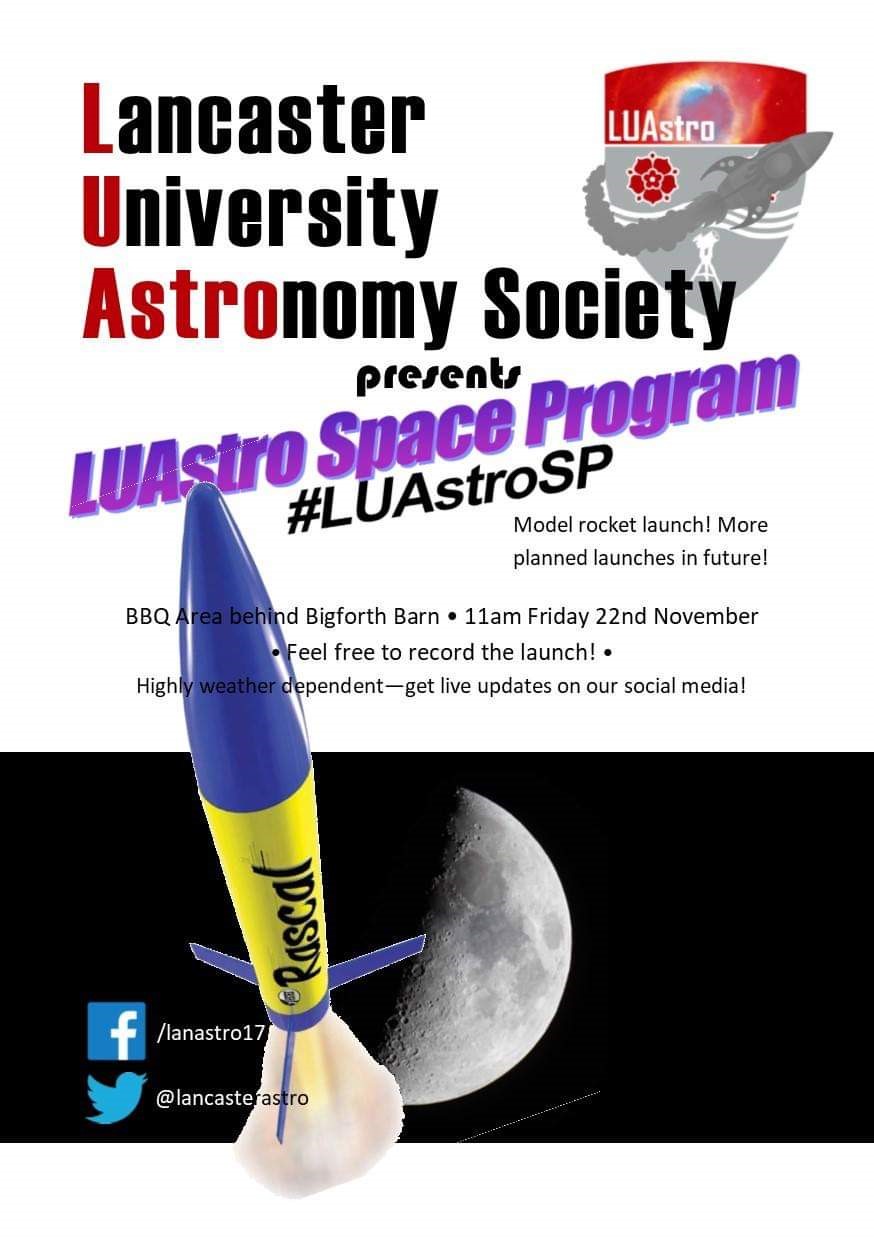
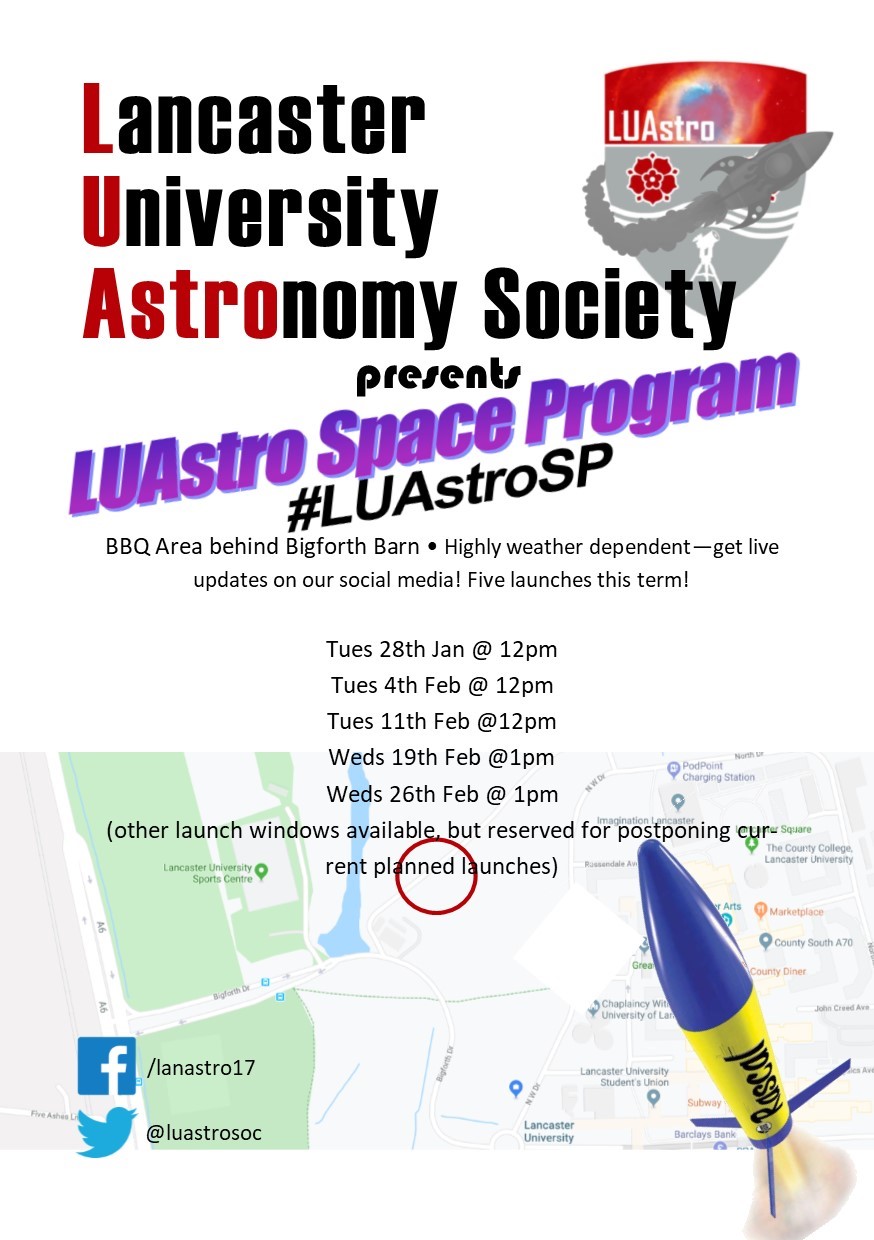
Going into January, the exec planned 5 rocket launches for the new term alone; with the aims of having each launch go higher than the previous attempt. The first launch of the new term, scheduled for the 28th January 2020, was cancelled due to poor weather. The second launch, on the 4th February at 12pm, was postponed a day to the 5th February at 1pm - where it went ahead as planned (although it took place at another location due to a closed footpath). The third launch of the term on the 11th February at 12pm was unfortunately cancelled due to Storm Ciara, which had hit Lancaster particularly hard at the time. The fourth launch, on the 19th February at 1pm, was cancelled for the same reason.
By the time it came to the final launch, on the 26th February at 1pm, Covid-19 had struck - and all in-person events across the university were cancelled outright. The LU Space Program was eventually restarted under a new exec, with Launch II completed fully on June 25th 2022.
The results of the second launch can be seen on our YouTube channel by clicking HERE.
Modern LUAstro
(2020 - Present)
Antonio Coulton was replaced by Keenan Wright, a then 4th-Year Astrophysics student, as President of the Society in early 2020. Due to the Covid-19 Pandemic, most LUAstro events took place virtually at this time from October 2020 (with Observing Nights reducing significantly as a result). Despite this, the then-small exec maintained an active presence and regular events, later to be replaced by an even smaller two-person Exec of Jacob Hughes as President and Michael Storey as Secretary from 2021/2022. LUSU policies were changed temporarily at this time to allow societies to maintain affiliation with fewer than three Exec members, so the Society was still able to continue in its prior form.
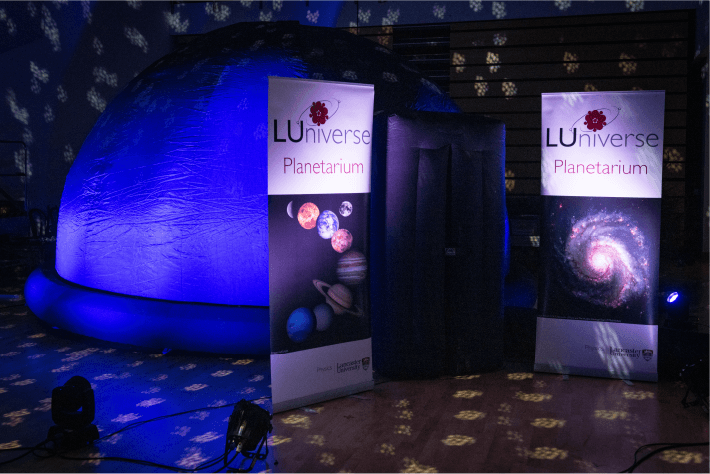
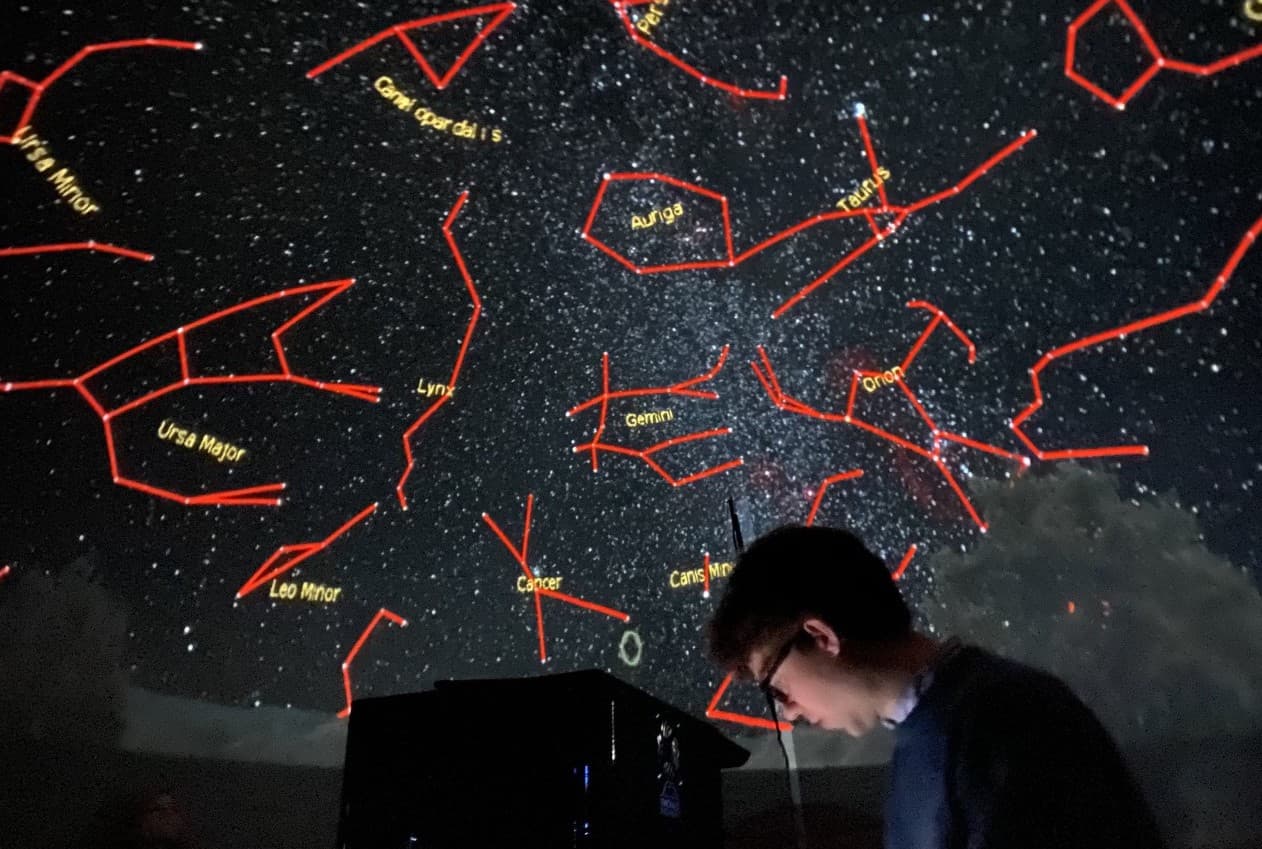
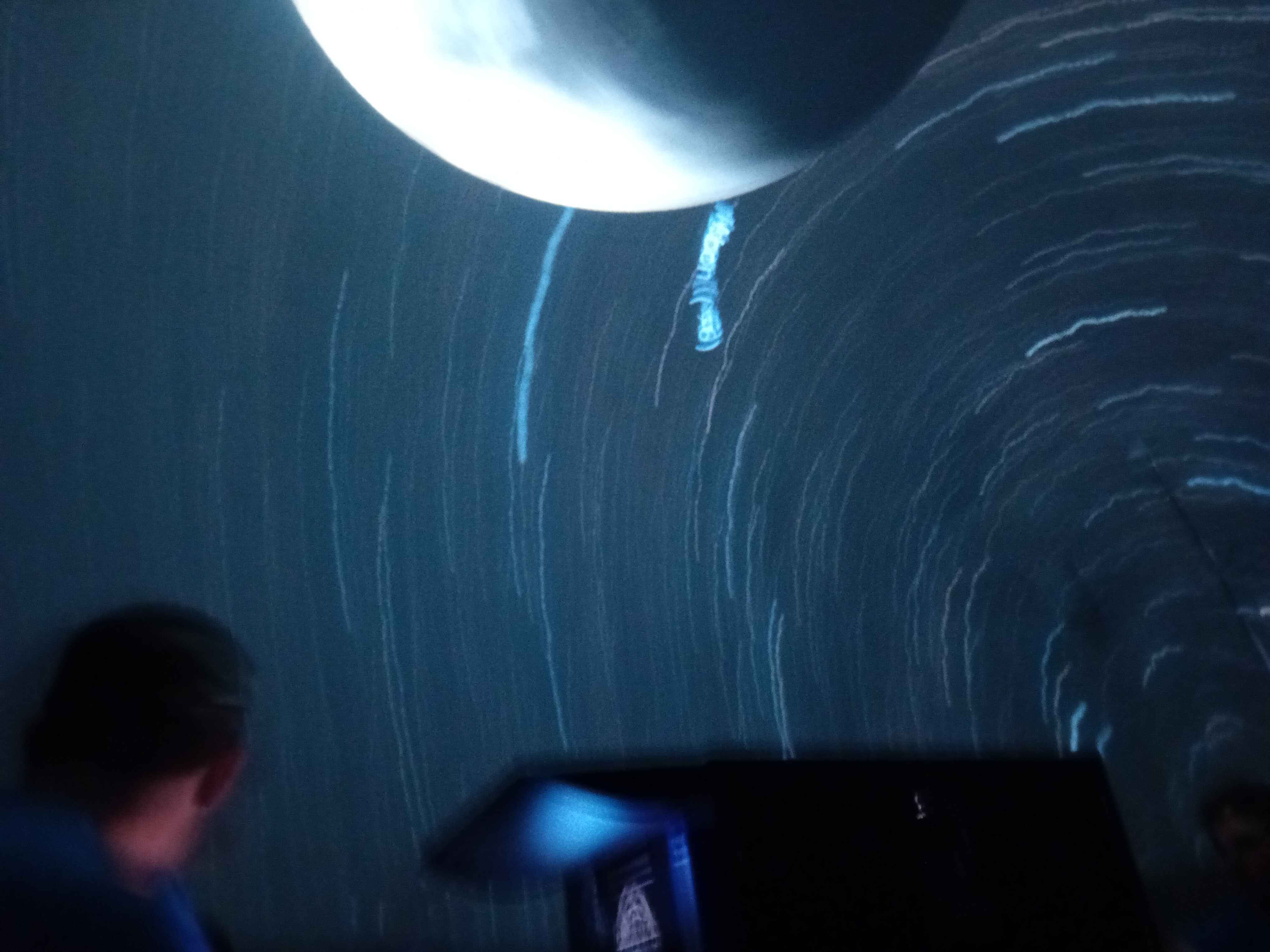
Outside of the Society, early 2020 marked the first use of the Physics Department's LUniverse Planetarium - a significant boost to the outreach of the Astrophysics, Space & Cosmology Research Group within the department. Partially funded by the university, with an additional £30,000 contribution from the Science and Technology Facilities Council (STFC), the large inflatable dome (measuring 5.5m x 7m with a height of 3.7m) hosts up to 15 people per show. Using a projector and software developed by Emerald Digital Planetarium Systems, this planetarium is still regularly used to the present day.
Midway through the Covid-19 pandemic, from April to July 2021, the planetarium began a series of online shows - LUniverse Online - to still maintain a consistent outreach presence. After the pandemic, in-person shows in the planetarium continued as before.
The end of the Covid-19 Pandemic around 2022 marked a new start for LUAstro. Jacob and Michael maintained general positions on the exec, but gave way to new exec members led by a new President - then 2nd-Year Astrophysics student Orlando Prügel-Bennett. Now that the Pandemic was over, Observing Nights and in-person socials were able to take place to the same degree as in 2019. Merchandise and posters were created, alongside trips to nearby observatories, and a final completion of the LU Space Program. This new larger exec allowed society members to excel at Astrophotography; building off skills gained by Jacob and Michael over lockdown.
Like in 2019, records of the society become much more thorough around this time. LUAstro began a newsletter, which ran weekly throughout Michaelmas and Lent term 22/23 (and is archived on the Newsletters page), alongside restarting the LU Space Program on a smaller and less ambitious scale.
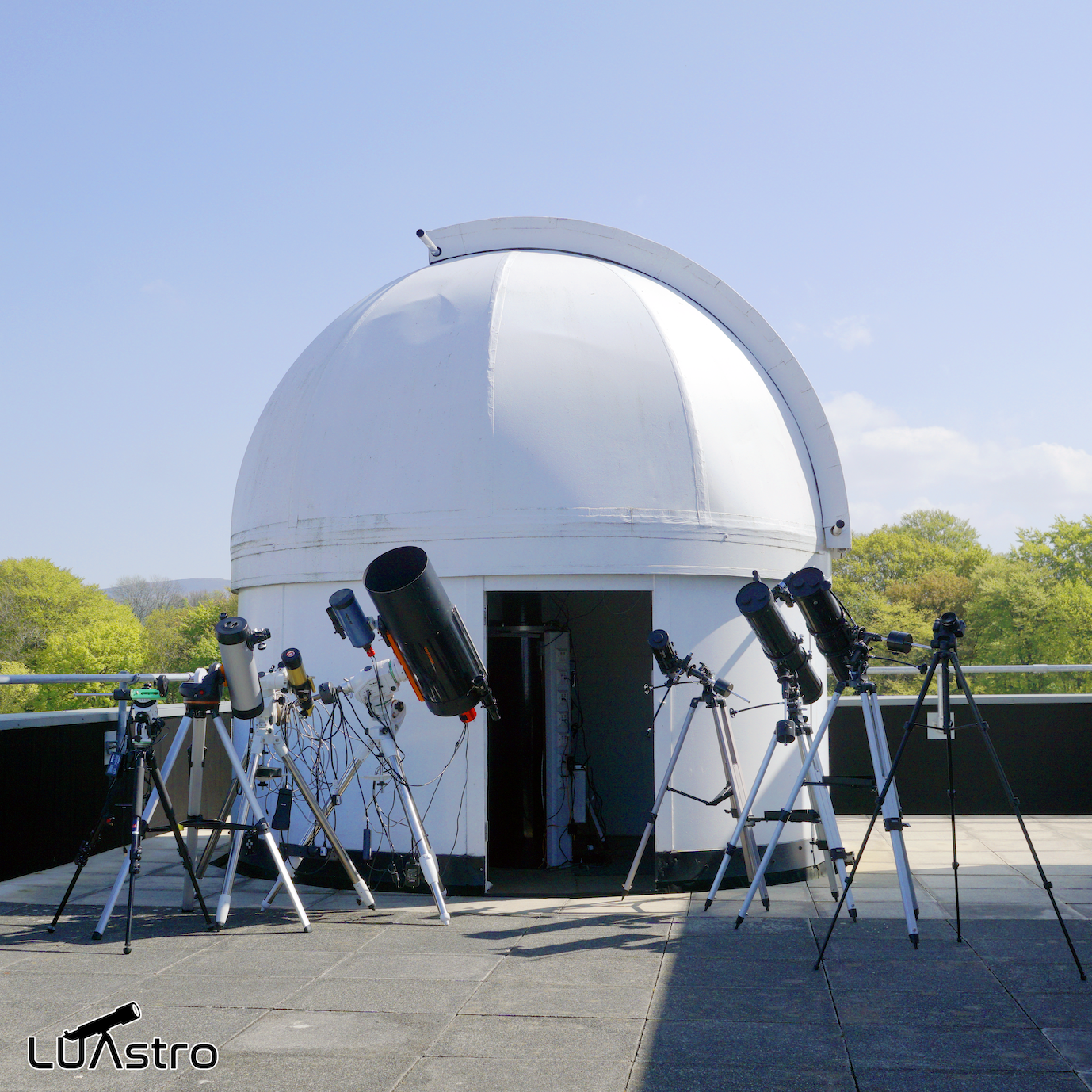
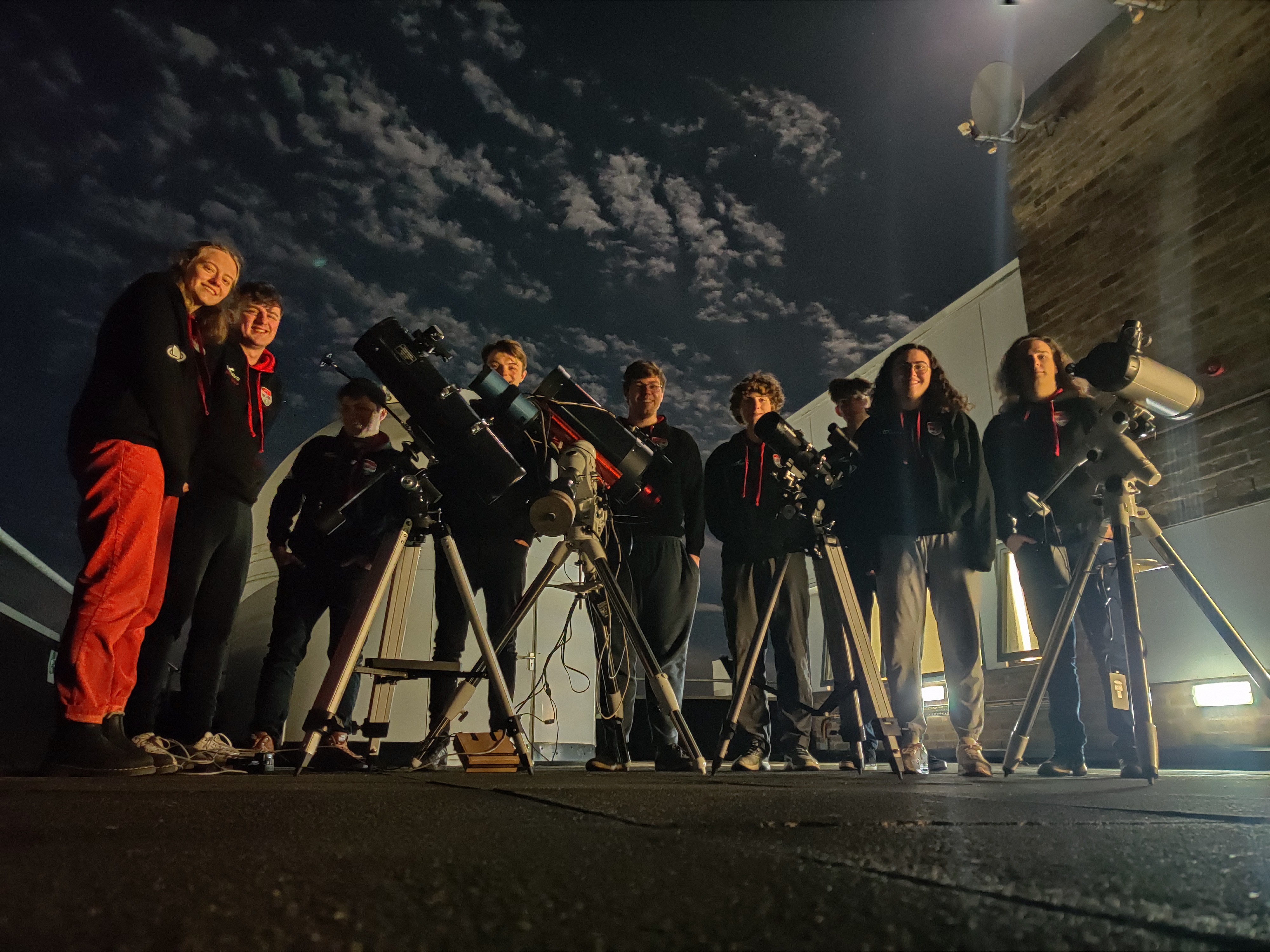
As mentioned earlier, newer members were able to learn from the experience of the continuing exec members Jacob and Michael. This, combined with the wide range of equipment the society had access to, a large number of active and passionate members, alongside access to then-recently refurbished Dame Kathleen Ollerenshaw Observatory, led to some of the society's finest Astrophotography.
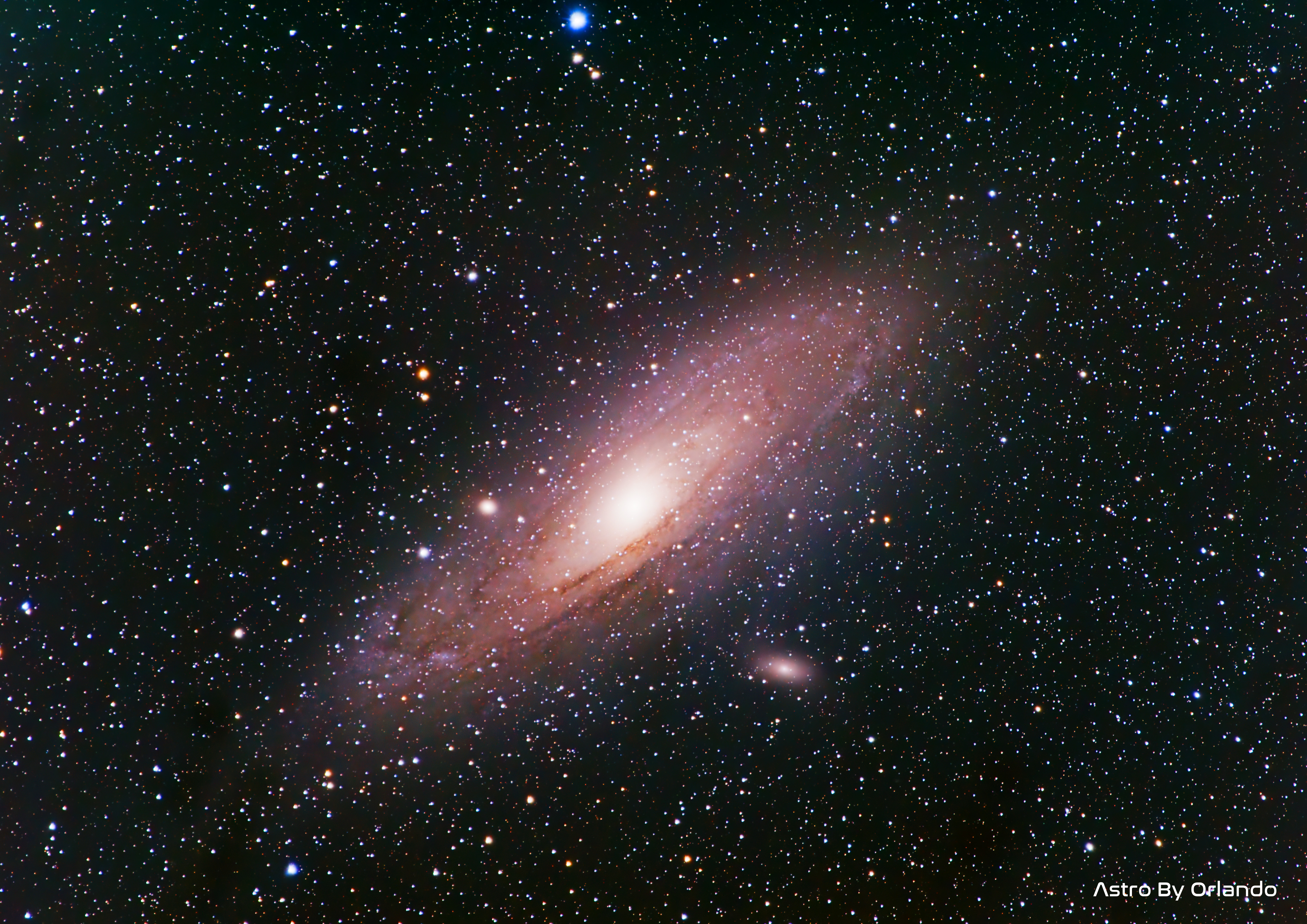
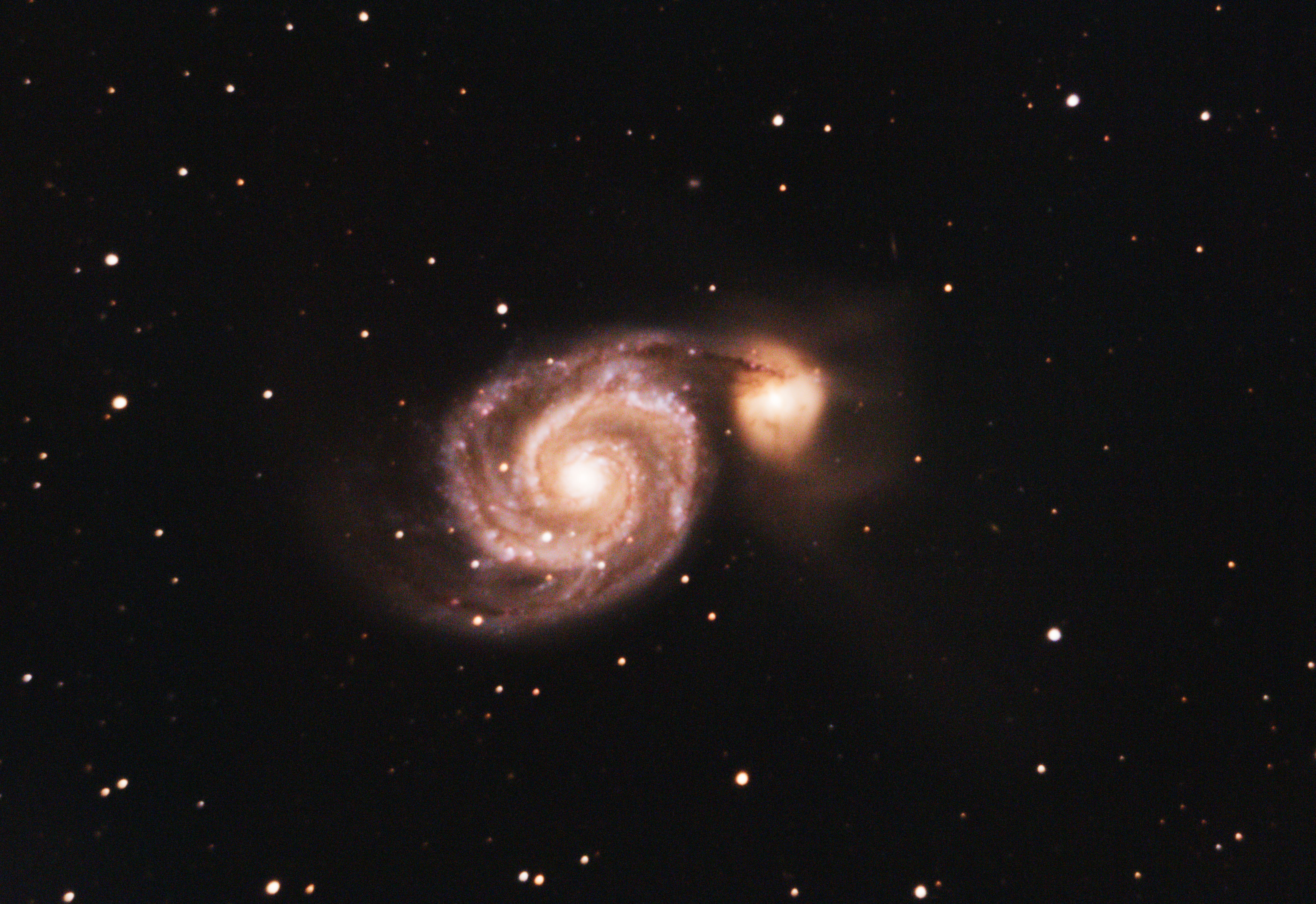
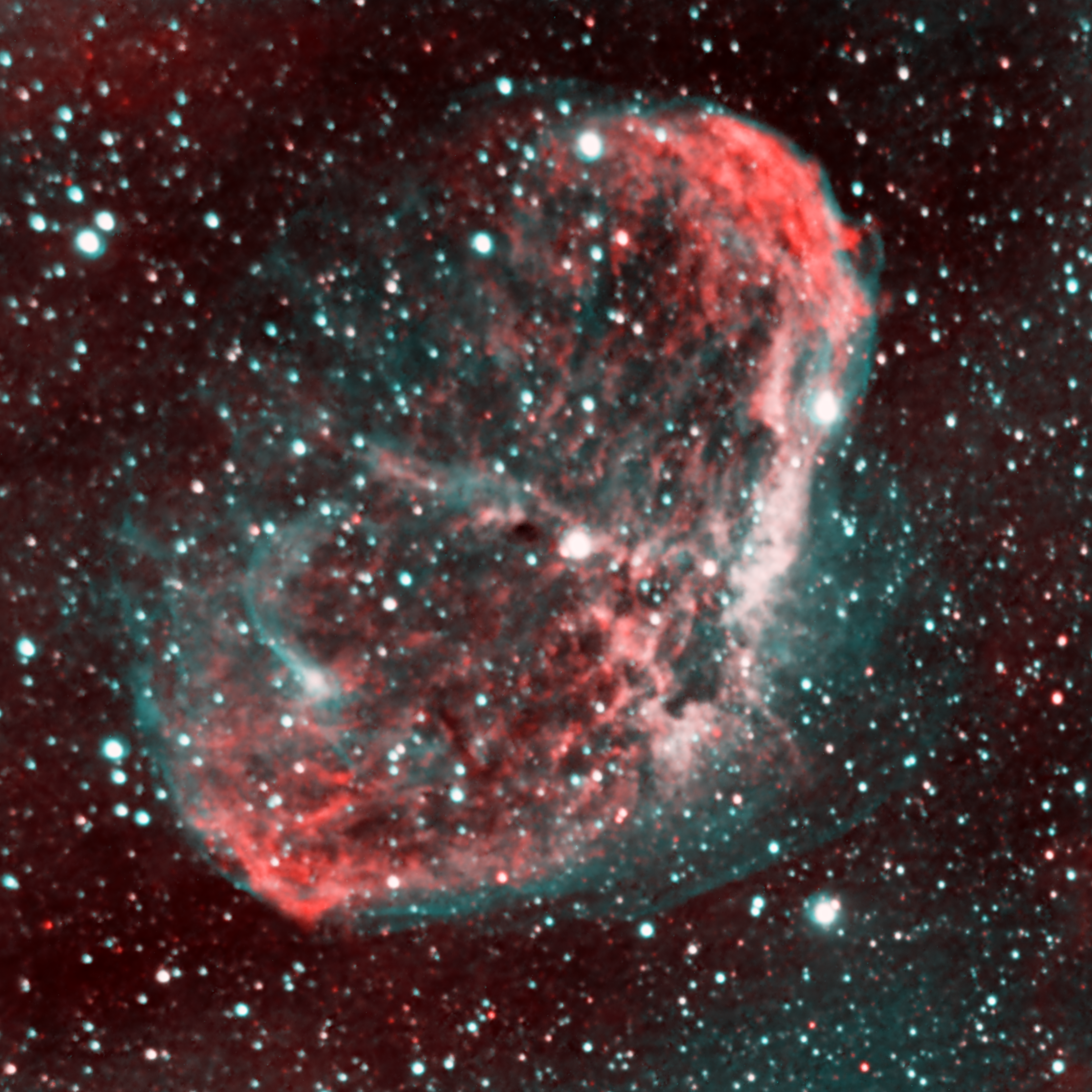
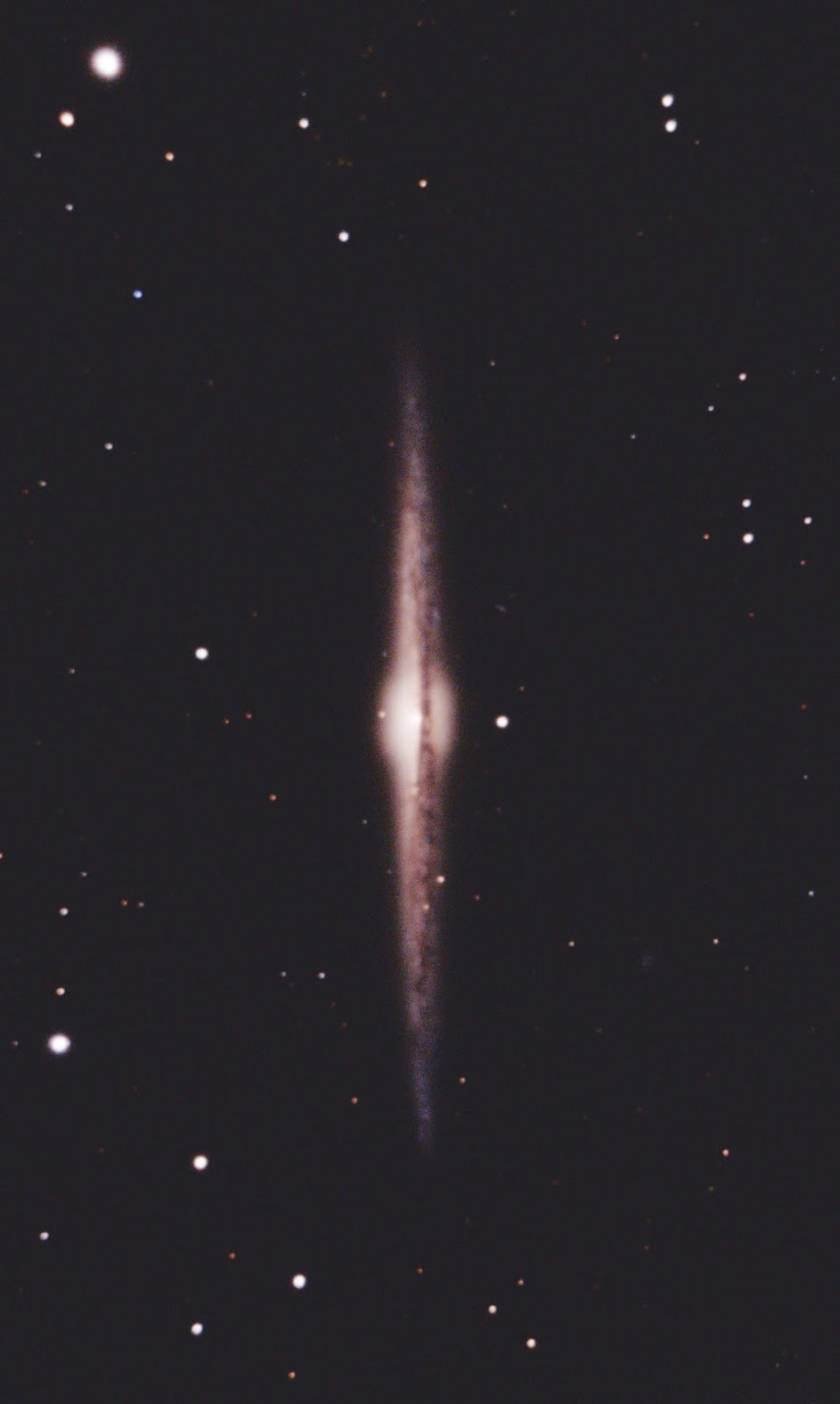
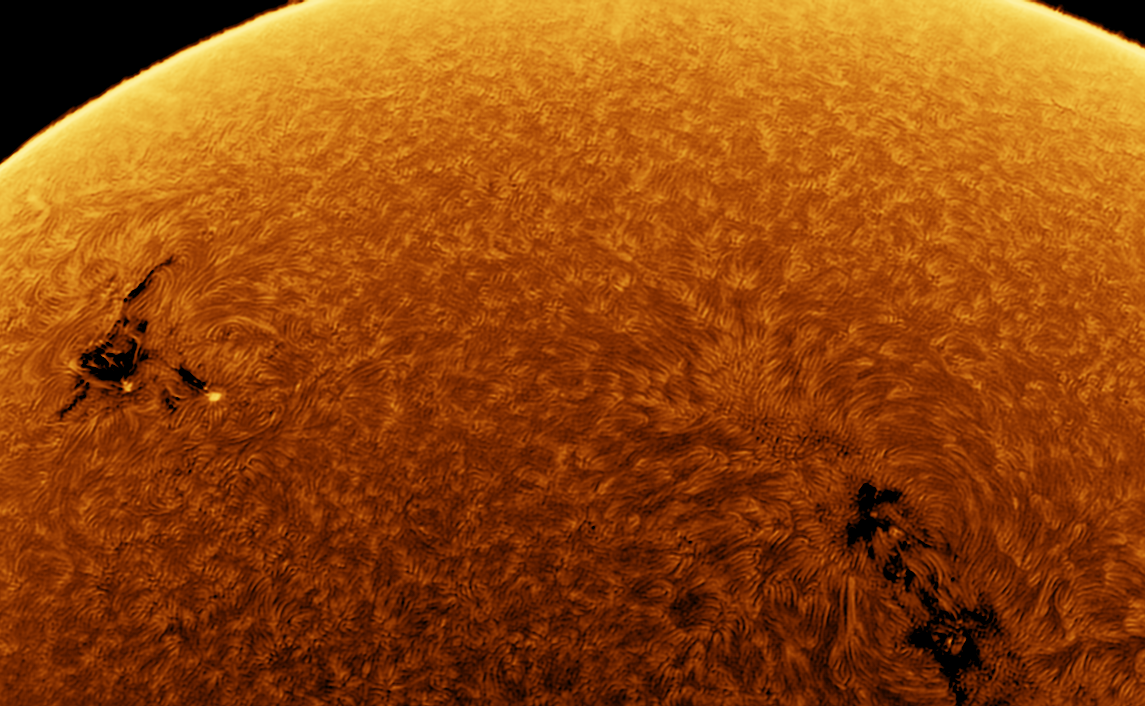
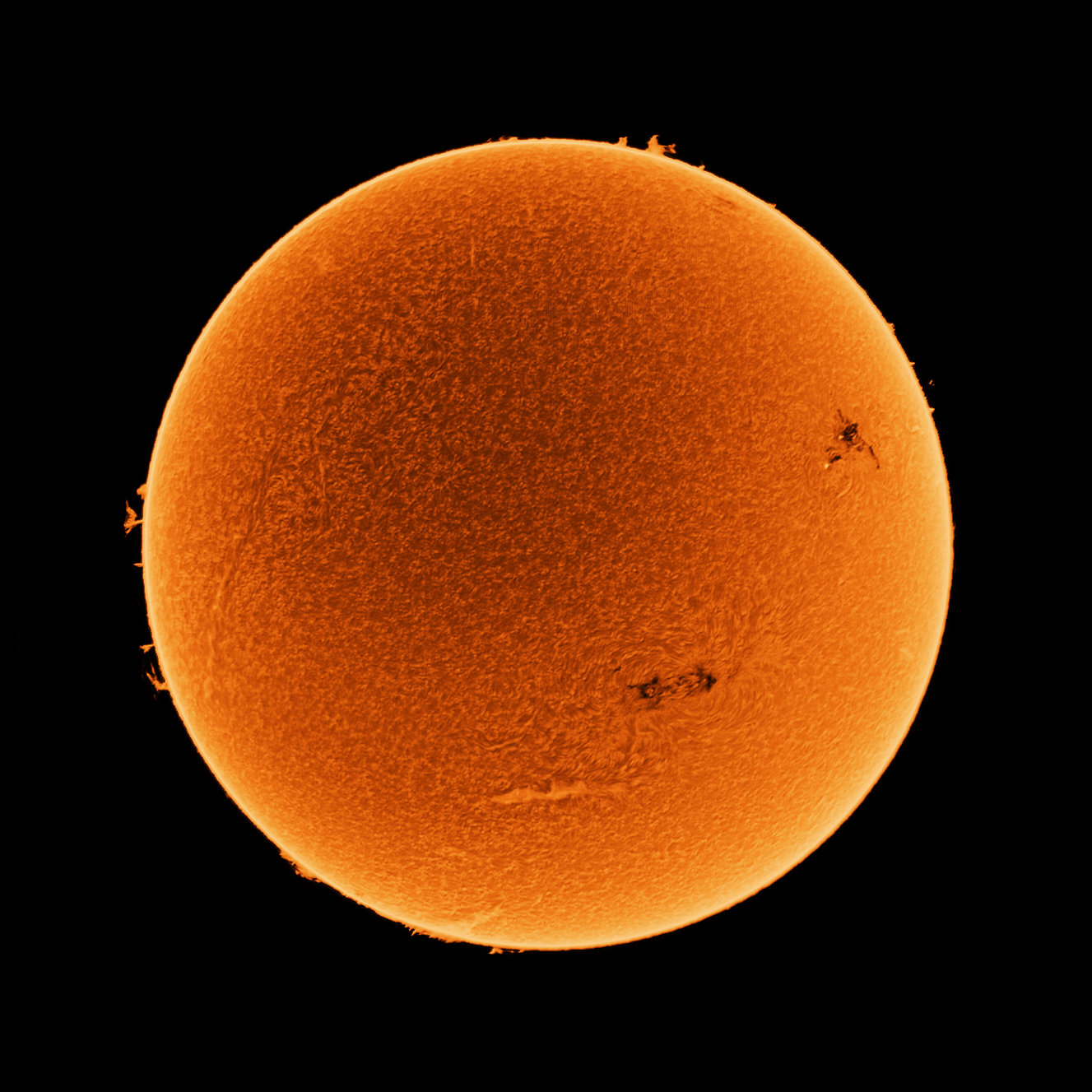
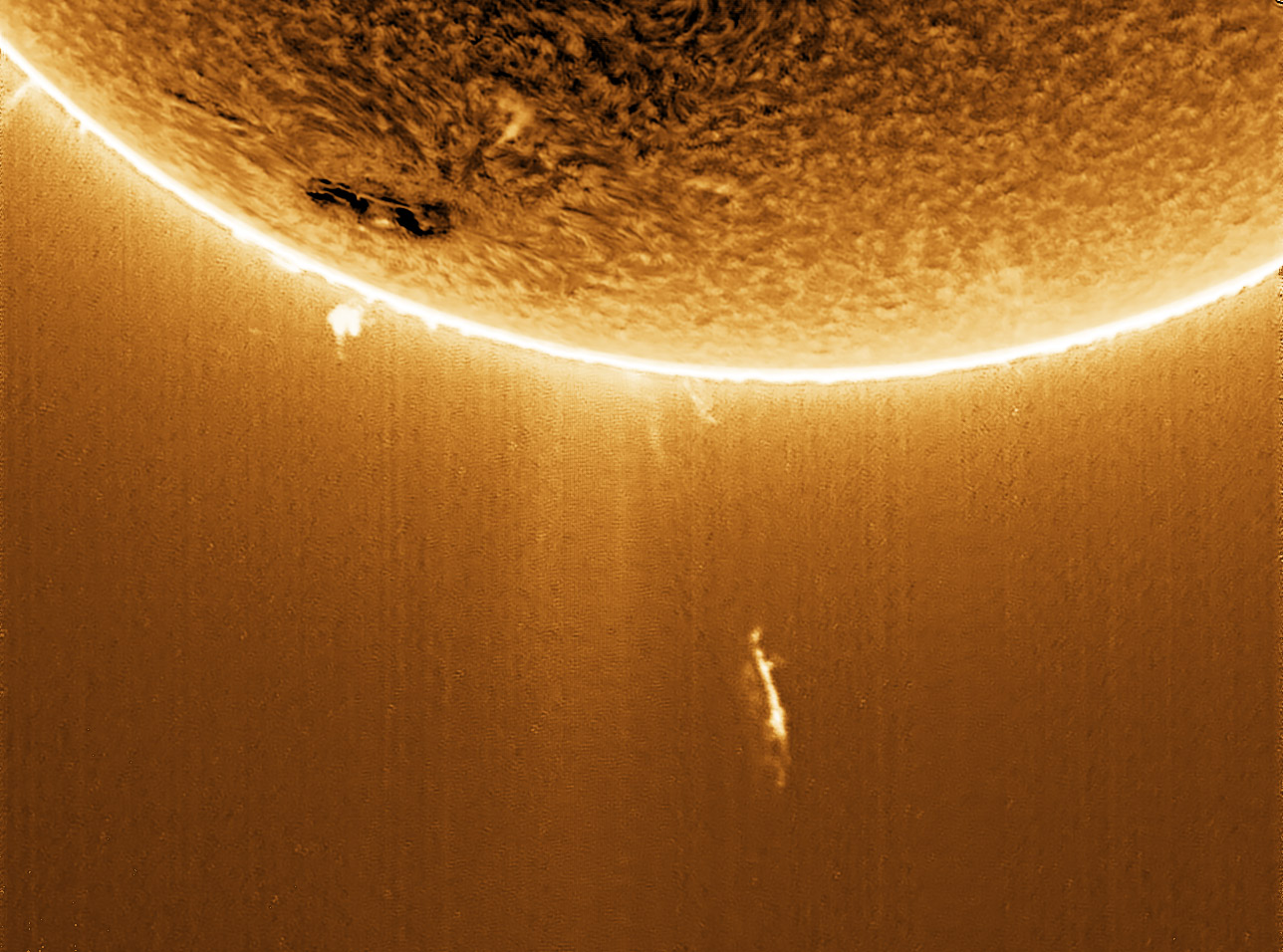
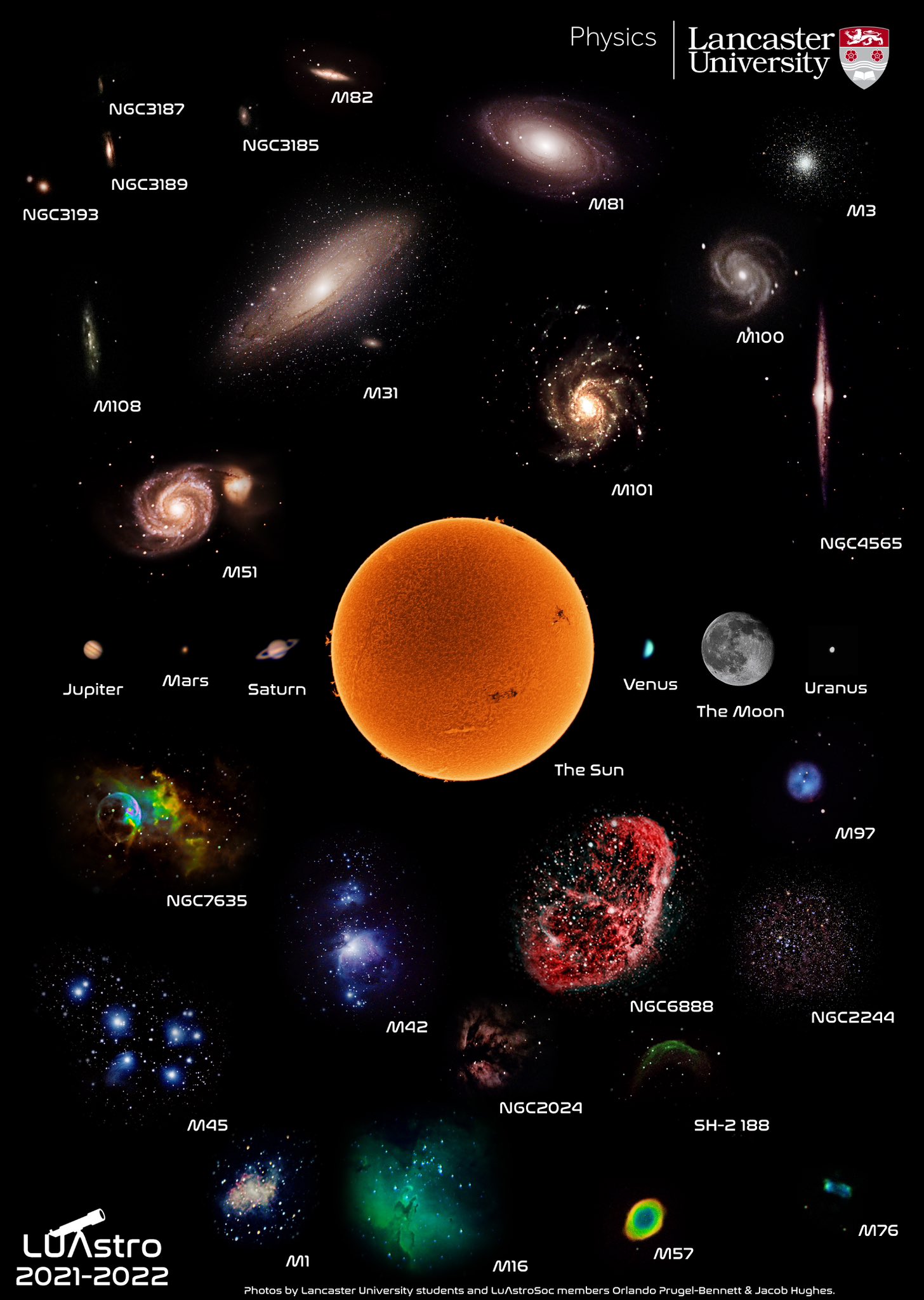
They hadn't completely learned from the failed ambitions of the 19/20 exec however, and aimed for an ambitious project of their own - the LYMAN:Alpha Astrophotography competition. Like the LUAstrophotography competition of the former exec, this competition aimed to test the astrophotographical skills of society members, but this time as part of Roses (the annual sports competition between the University of Lancaster and the University of York). It seemed unfair to have exec members participate (from either LUAstro or the UOYAstroSoc), which unfortunately, like the previous Astrophotography competition, meant that there were not enough entries to make the event feasible.
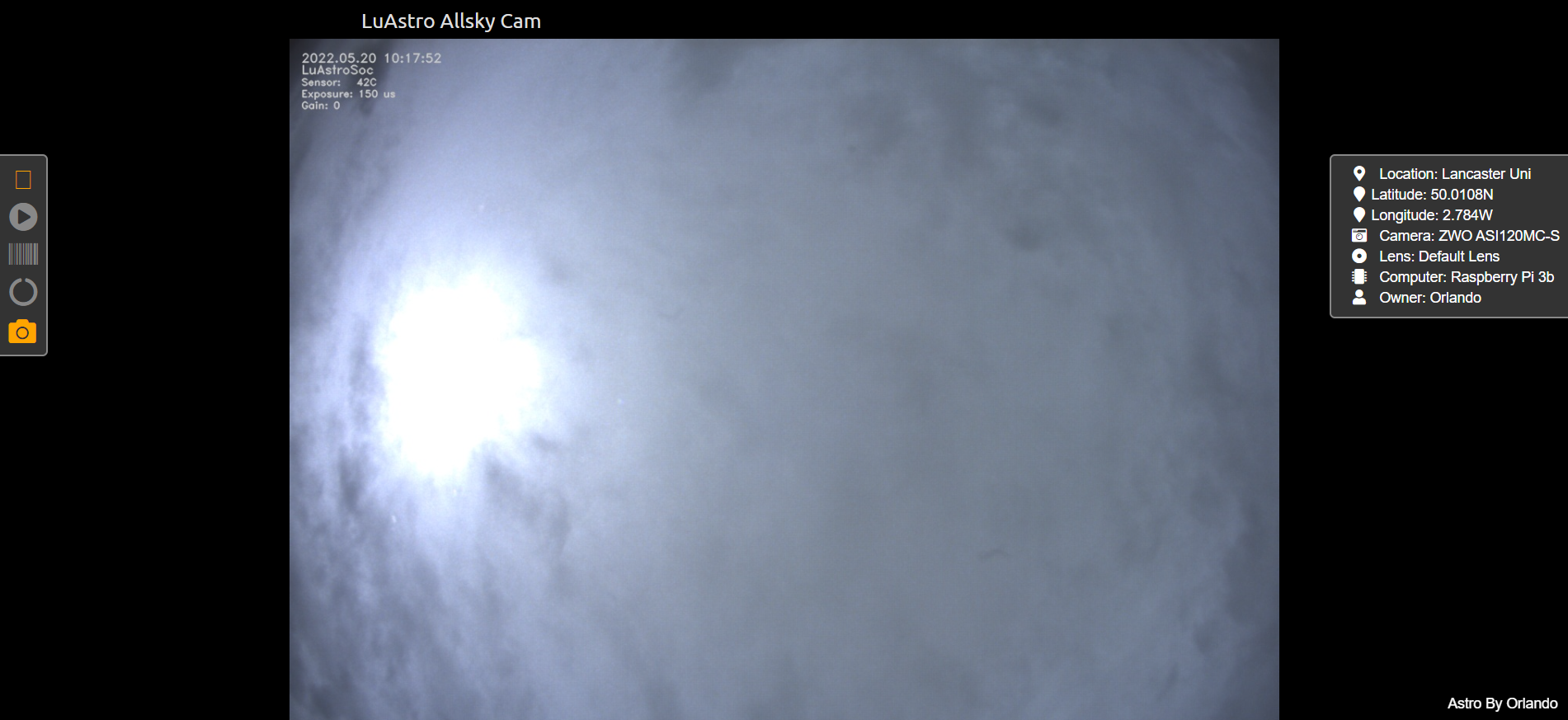
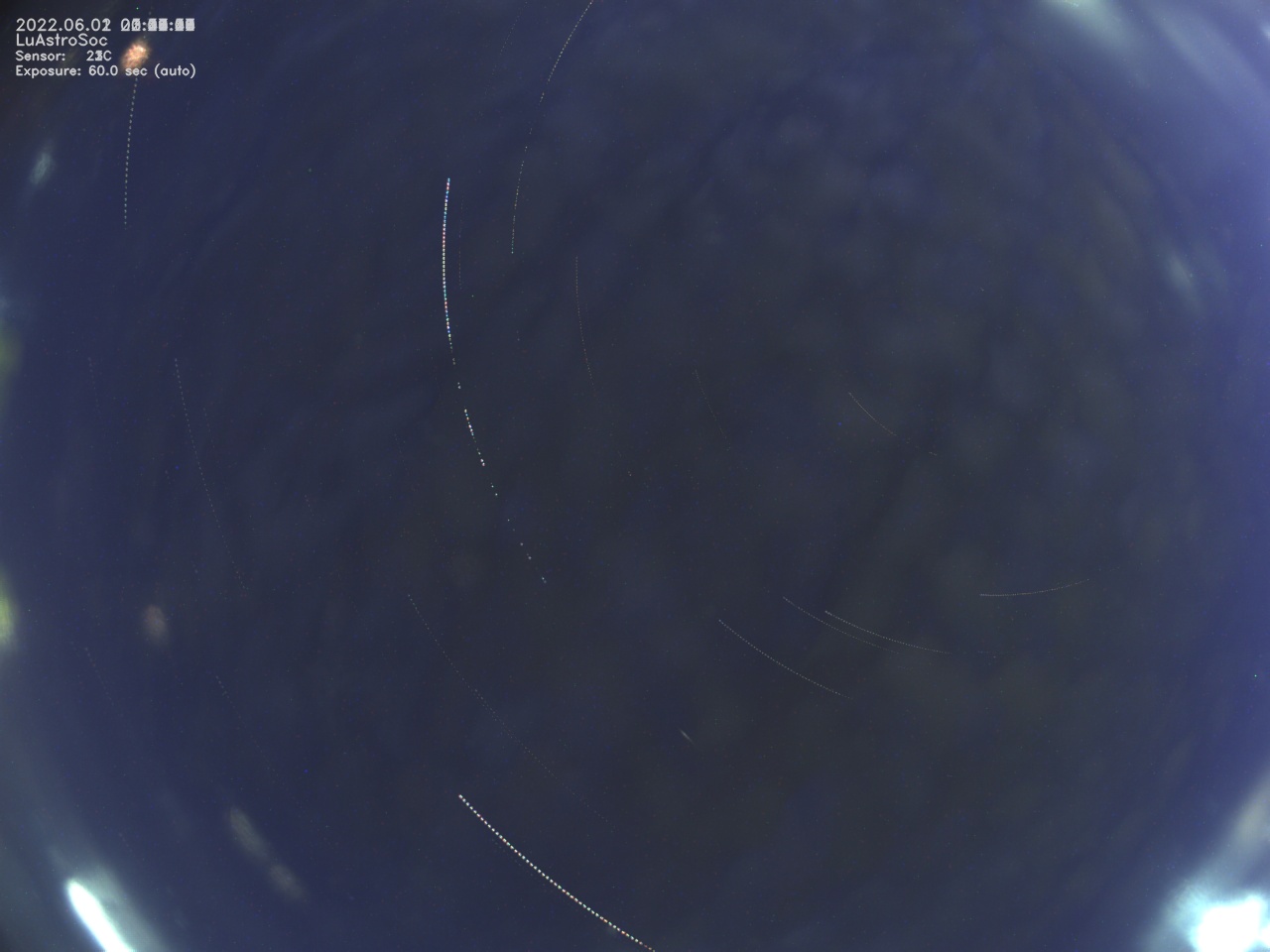
Alongside this, the society had an AllSky Camera active at this time, set up by Orlando Prügel-Bennett. This camera allowed the society to have a live view of the sky at the Astrolab, via a now-inactive subdomain on Orlando's Astronomy website.
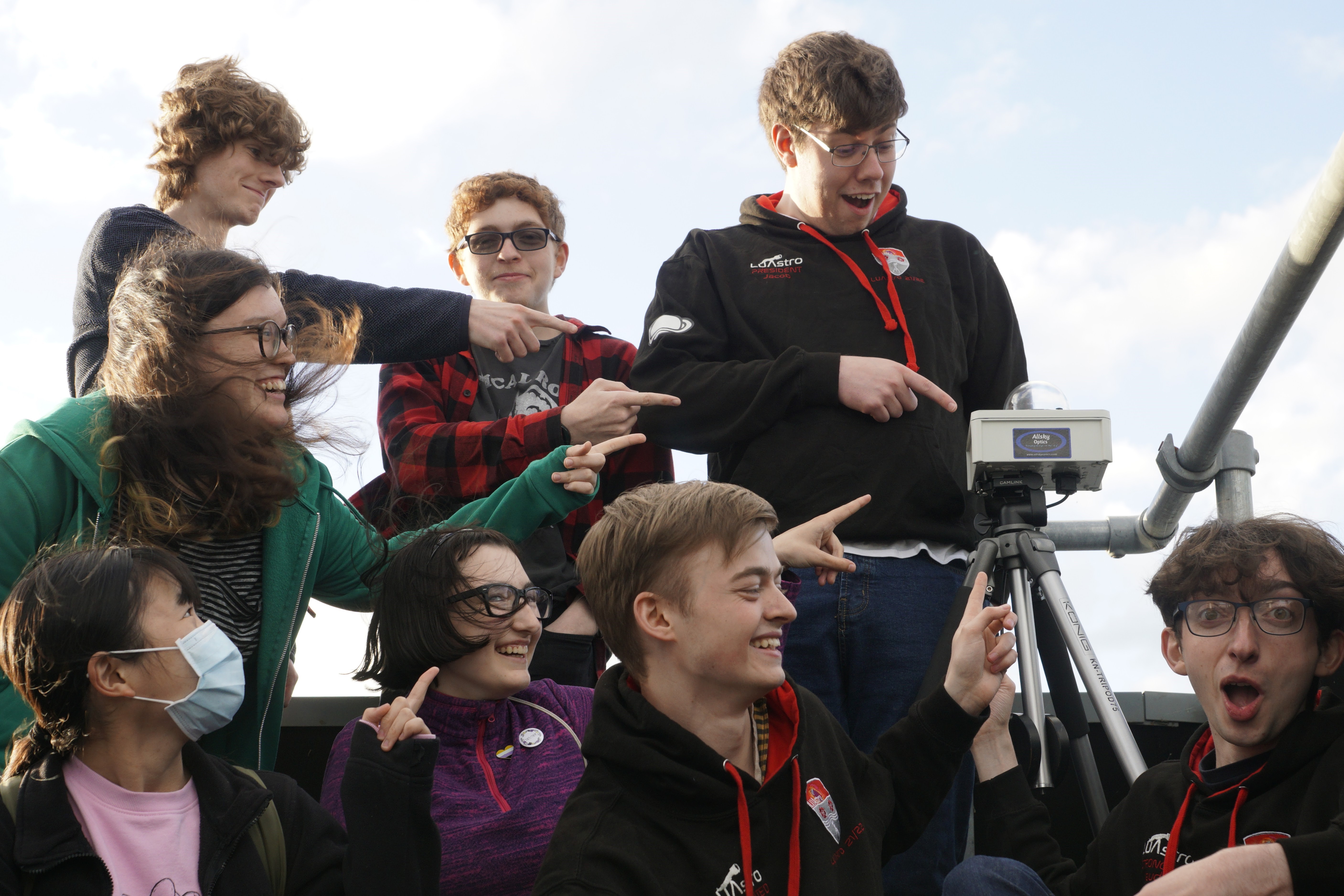
For the year 23/24, Morgan O'Carroll succeeded Orlando Prügel-Bennett as President of LUAstro. With much of the previously active exec members leaving, the society became relatively inactive for this year, only restarting activities on a comparable scale the following year, from 24/25.
The society had struggled significantly to gain active members by the end of the 23/24 academic year; with only two members appearing to the society's Hustings at the end of term (and only one of those members attending with the intent to run for a role). Orlando Prügel-Bennett, who was continuing on in his final year, re-ran as President.
The society had tremendously lucky timing for its first Observing Night on the 10th October 2024, which immediately followed Freshers' Fair and lay on the exact night that the Northern Lights were visible in Lancaster. Combined, this led to the most successful Observing Night on record, with over 100 students attending the event. Other events by the society included an ice-skating social with LUPhys, an Astrophotography workshop, and a trip on the 23rd February 2025 to Jodrell Bank.
For the 25/26 academic year, John Ray took over as President of LUAstro. Realising that records of the society in the previous couple of years were difficult to come by, he decided to create a permanent website for the society to use to archive information, host members' astrophotography, and for other things - spending much of Summer 2025 coding one from scratch. Later in the year, he contacted past members of the society, found older records of the society in the Astrolab, and scoured over social media posts to create a page detailing the complete history of the society.